

In boardrooms across the mid-market, a quiet revolution is underway. Finance and accounting are evolving from historical record-keepers to engines of foresight, automation, and execution.
By 2026, the gap between traditional models and strategic finance architecture will be stark. Finance leaders won’t just report on outcomes, they’ll shape them.
For firms between $50M and $1B in revenue, this shift isn’t optional. AI, real-time data, and hybrid financial talent are dismantling old assumptions.
Close cycles are shrinking. Static plans are being replaced by dynamic modeling. Finance is becoming a catalyst for decision-making, not just compliance.
At Premier NX, we see these shifts in motion every day. Three dominant trends are emerging—trends that will separate tomorrow’s leaders from those left behind.
Trend #1: The AI-Augmented Finance Team
From invoice processing to cash flow forecasting, AI has already begun to reshape routine finance operations. But by 2026, its role will extend far beyond task automation.
Finance teams are shifting from human-led, AI-assisted workflows to AI-led, human-governed models. In this new architecture, AI doesn’t just accelerate existing processes—it redefines them.
Key shifts include:
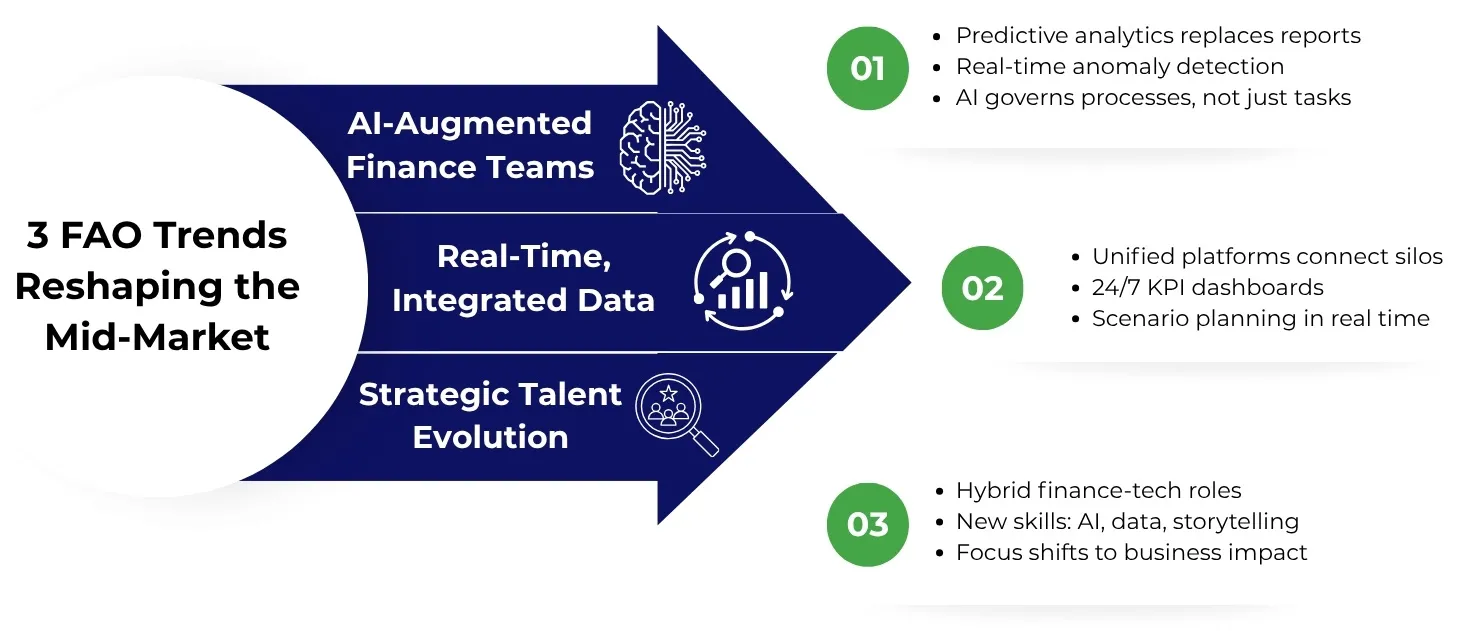
- Predictive analytics replacing reactive reports
- Continuous auditing driven by real-time anomaly detection
- Routine approvals and allocations handled autonomously
This shift levels the playing field for mid-sized firms. AI can deliver enterprise-grade forecasting, compliance, and scenario modeling—without enterprise-scale budgets.
Yet the opportunity comes with challenges: governance, ethics, and skill development become critical. The question is no longer whether to adopt AI—but how to structure your team to work with it.
Trend #2: The Real-Time, Integrated Data Ecosystem
Traditional finance operates in cycles; modern finance operates in streams. By 2026, the shift to real-time data integration will be irreversible.
Mid-market CFOs are dismantling siloed systems and fragmented reporting in favor of unified platforms that connect finance with operations, sales, and beyond. This isn’t just IT strategy—it’s financial agility.
Key components include:
- Unified data layers that connect ERP, CRM, HR, and ops in real time
- Live dashboards that offer 24/7 visibility into KPIs and exceptions
- Dynamic scenario planning powered by integrated, clean data
For finance, this means faster closes, tighter controls, and no more end-of-month surprises. For the business, it means decisions made on truth, not lag.
The value isn’t just in speed—it’s in synchronized execution across the enterprise.
Trend #3: The Strategic Talent Evolution
As automation and data take over transactional tasks, the role of the finance professional is transforming.
By 2026, successful finance teams will look less like accounting departments and more like internal strategy consultancies.
Key shifts:
- Rise of hybrid roles: blending financial acumen with data science, systems thinking, and communication
- Emerging specialties: such as AI governance leads, data storytellers, and process architects
- Shift in value: from precision in bookkeeping to fluency in business impact
This evolution isn’t just about hiring; it’s about reskilling, redesigning roles, and elevating finance from a cost center to a competitive advantage.
The Convergence: How These Trends Interconnect
AI augmentation, real-time data, and strategic talent aren’t independent trends. They’re interdependent forces.
AI demands clean data and the right human oversight. Real-time systems require new skill sets to interpret and act on insight. Talent must evolve to operate in this dynamic, integrated environment.
When aligned, these trends create a finance and accounting model that is fast, predictive, and deeply embedded in enterprise decision-making.
For mid-market firms, the opportunity lies in adapting faster than enterprise giants—by acting deliberately, not reactively.
Translating Trends into Strategic Execution
These trends aren’t distant forecasts—they’re already reshaping how finance and accounting operate across the mid-market.
At Premier NX, we work with organizations that are ready to align their finance strategy with the demands of a faster, more intelligent operating environment.
Key areas where our capabilities intersect with these shifts:
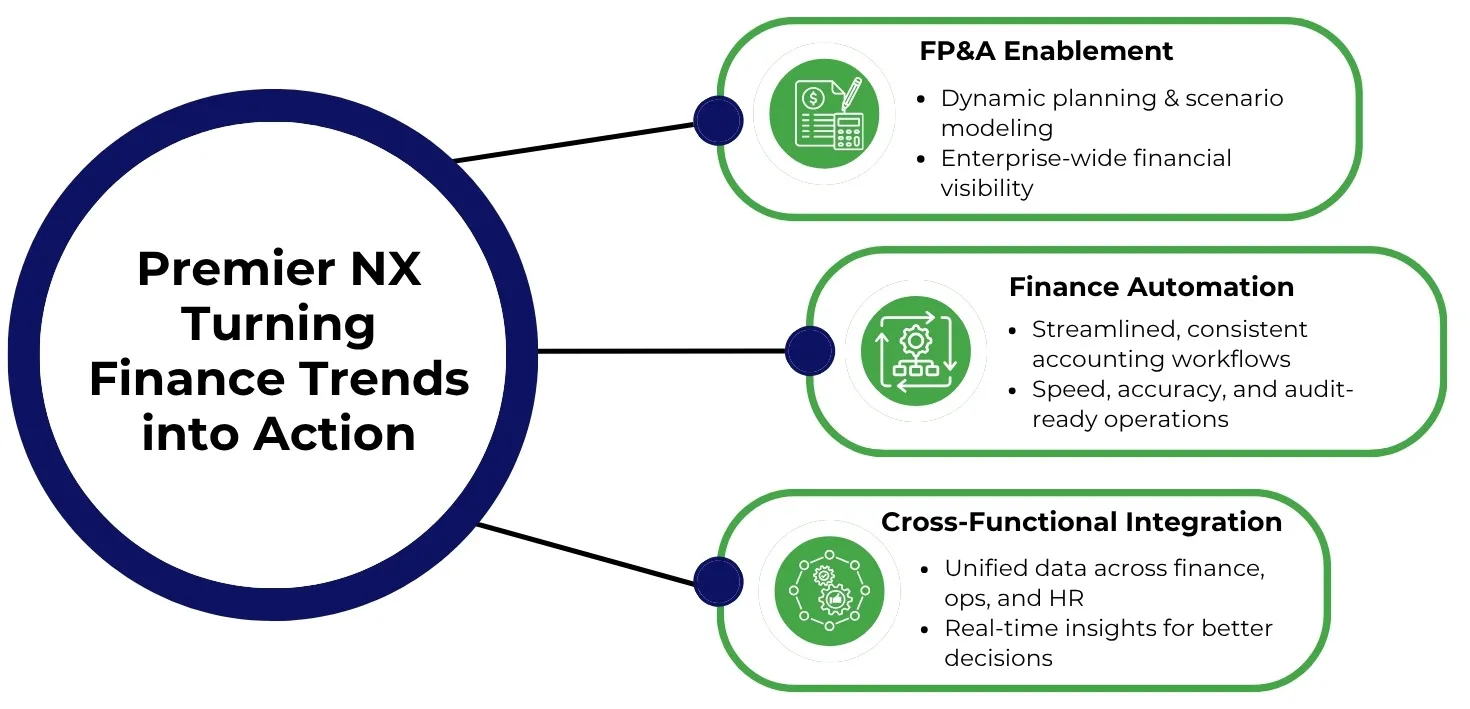
- FP&A enablement to support dynamic planning, scenario modeling, and enterprise-level visibility
- Finance process automation that drives consistency, speed, and data confidence across the accounting lifecycle
- Cross-functional integration through streamlined workflows, unified data environments, and actionable reporting
These are not point solutions—they’re foundational moves for finance teams preparing to lead, not follow.
From Bookkeeper to Business Partner
By 2026, finance and accounting will no longer be measured by how accurately it reports the past—but by how confidently it shapes what’s next.
The firms leading this shift are elevating FP&A, embedding automation, and integrating finance across the enterprise.
Is your finance model built to lead—or just to comply?
At Premier NX, we work with mid-market leaders to transform finance through data fluency, operational precision, and future-ready process design.
Schedule a conversation with our finance transformation experts to explore what that could look like for your organization.
About the Author
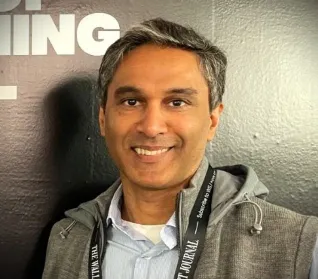
As CEO, Ali Din oversees the overall strategy and direction for Premier NX. With senior leadership roles at global HR and recruiting platforms, Indeed and ADP. Ali has over 25 years of experience in the IT and advanced technology sector. Ali’s time is focused on transformation in the business, both for professional development and for clients, to enhance business outcomes.