

Key Takeaways
- 1Go-live is only the first milestone
- 2Odoo value depends on operating discipline
- 3Ongoing support keeps the platform improving
Odoo go-live is not the end of ERP value creation. It is the point at which the platform begins to demonstrate its ability to support daily decisions, workflows, reporting, and operational coordination over time.
For mid-market organisations, implementation gets Odoo up and running. Ongoing ownership, adoption, reporting discipline, and workflow refinement determine whether the platform continues to create value.
Why Odoo Value Does Not End at Go-Live
At go-live, most teams focus on immediate implementation questions. Are workflows configured correctly? Is the data accurate? Are users trained? Are core processes functioning?
Those questions matter. But within a few months, the conversation usually changes.
Leaders begin by asking whether teams are using the system consistently, whether reports reflect how the business actually operates, whether decisions are being made based on trusted data, and whether workarounds are emerging outside the platform.
That is when Odoo shifts from an implementation project to an operating platform.
ERP research from firms such as Gartner, Deloitte, and Panorama Consulting points to the same broader lesson: organisations achieve stronger ERP returns when they continue to refine processes, adoption, governance, and operating models after go-live.
Considering Odoo support after implementation? Premier NX helps mid-market teams talk through practical next steps for post-go-live management, workflow refinement, and ongoing platform improvement.
The Operating Layer Around Odoo
Odoo can connect finance, sales, service, projects, and operations on a single platform. But the system itself does not decide how the business should manage approvals, exceptions, reporting rules, workflow changes, or cross-functional ownership.
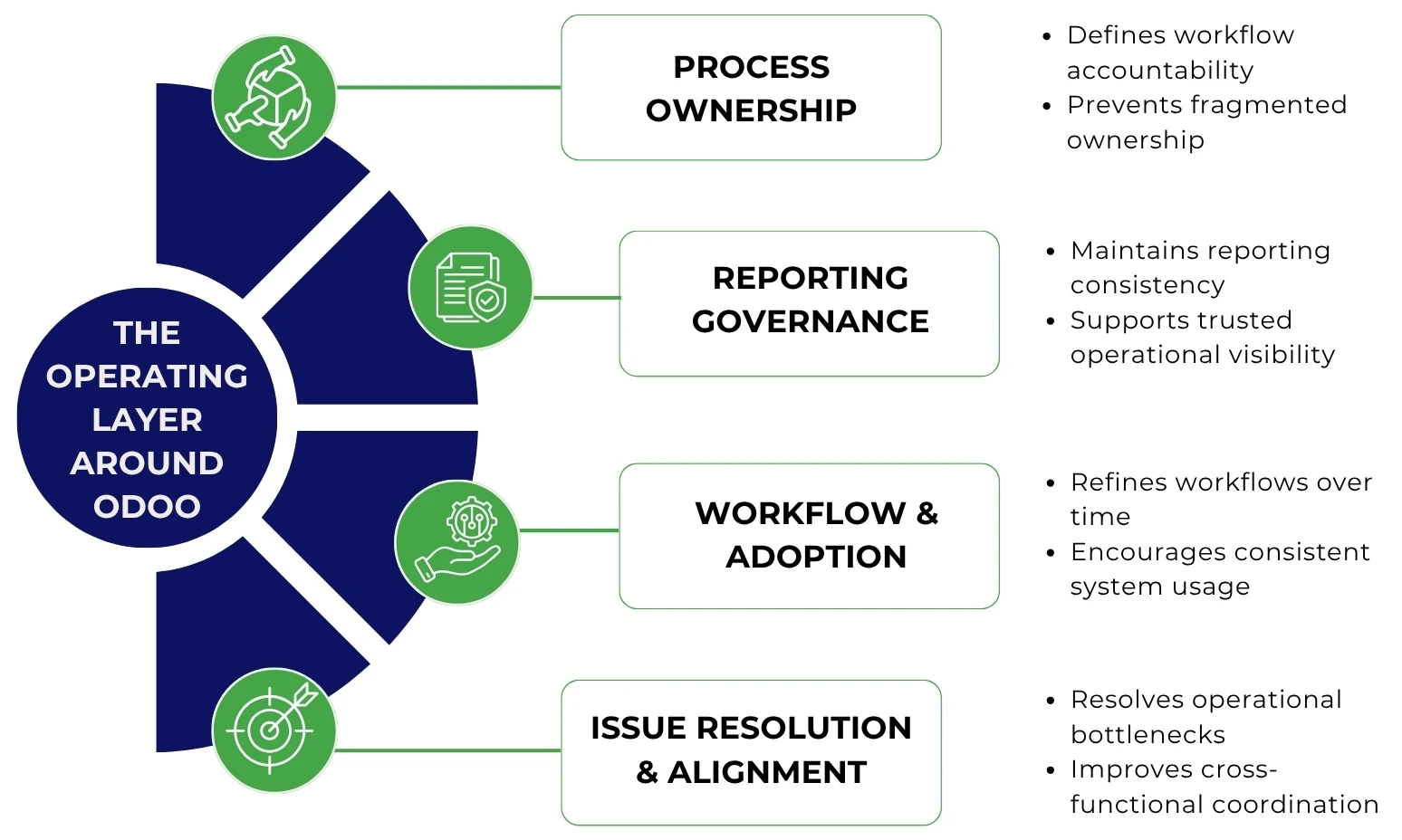
That responsibility sits in the operating layer around the platform.
It includes process ownership, reporting governance, workflow updates, user adoption, issue resolution, and cross-functional accountability. Without this layer, familiar problems often appear after go-live: workarounds return, reporting definitions become inconsistent, ownership fragments between departments, and adoption stabilises without improving.
These are rarely technical problems alone. They are operational problems.
A system can be live and still underused. It can process transactions correctly and still leave leaders with limited operational clarity.
What Odoo Needs After Go-Live
Once Odoo becomes part of daily operations, the organisation needs a practical rhythm to keep the platform aligned with how the business works.
That means reviewing how teams use the system, where friction appears, which workflows need refinement, and whether reporting definitions remain consistent. It also means carefully managing access changes and ensuring process ownership does not become unclear over time.
Go-live should be treated as a milestone, not the finish line.
Why Odoo Value Can Plateau After Go-Live
Mid-market organisations often invest heavily in implementation but do not always have the internal capacity to manage ongoing system evolution.
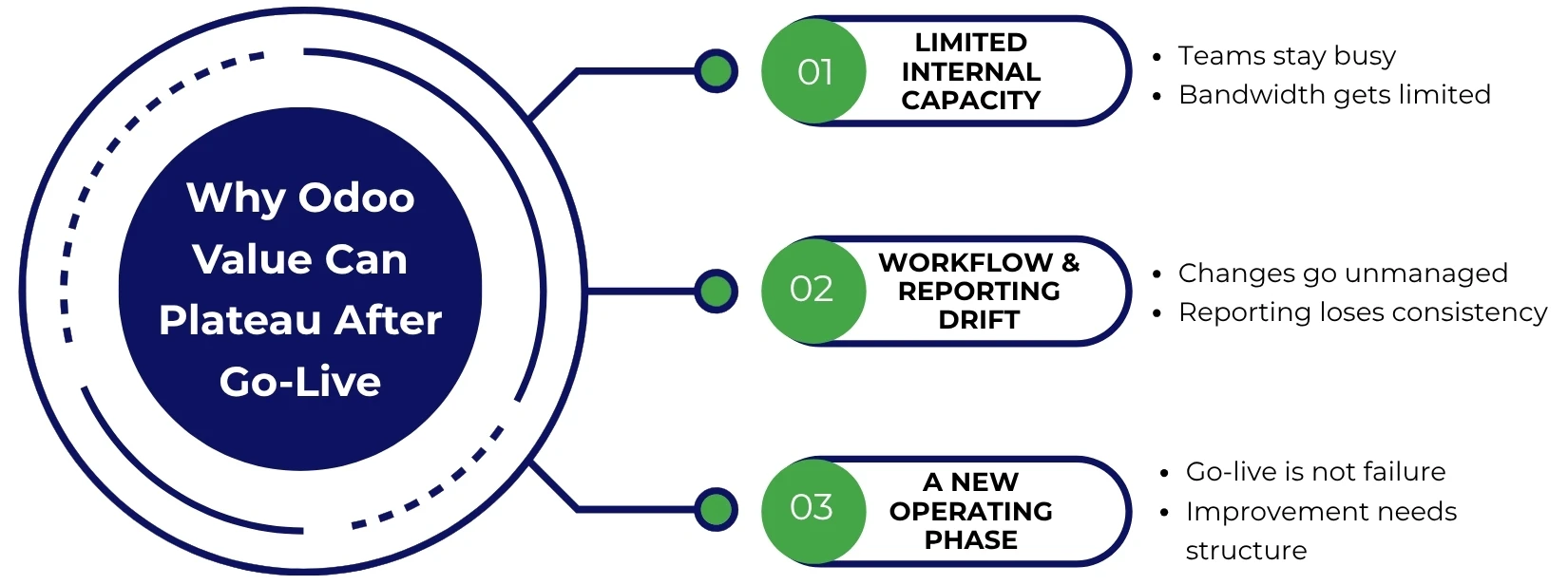
Teams are busy running the business. IT may be focused on daily support. Finance and operations leaders may know what needs to improve, but may not have the bandwidth to manage every workflow change, reporting refinement, or recurring issue.
This does not mean the implementation failed. It means the business has moved into a different phase.
At this stage, the question is no longer whether Odoo works. The question is whether the organisation has sufficient structure to keep improving how work gets done.
How Premier NX Supports Odoo After Go-Live
Premier NX helps mid-market businesses implement, manage, and improve Odoo with a practical, execution-led approach.
The focus is not just on configuration. It is helping Odoo support how the business operates every day: how teams use the system, how reporting is trusted, how issues are resolved, and how changes are managed as the organisation evolves.
This aligns naturally with the Premier PRIME framework: Plan, Recommend, Implement, Manage, and Enhance. For Odoo, the later stages matter as much as the initial rollout. Implementation introduces the platform. Ongoing management and enhancement help ensure the platform continues to support the business as workflows, teams, reporting needs, and operational priorities change.
Questions to Ask After Odoo Goes Live
A useful way to evaluate post-go-live readiness is to ask:
- Who owns each major workflow inside Odoo?
- Are reporting definitions consistent across teams?
- Where are users still relying on spreadsheets or manual workarounds?
- Which recurring issues are slowing adoption?
- Is the platform improving as the business grows?
These questions help determine whether Odoo is simply running or actively supporting better operations.
Sustaining Odoo Value Beyond Go-Live
Odoo value is not created by go-live alone. It is created through ongoing adoption, ownership, reporting discipline, workflow refinement, and platform improvement.
Premier NX helps mid-market businesses move beyond implementation by supporting the operating layer that helps Odoo work clearly, consistently, and effectively over time.
Looking to strengthen Odoo after go-live? Talk through your Odoo requirements with Premier NX and identify the next practical step for implementation, support, or ongoing improvement.
About the Author

Sheraz Chaudhry
Head of Sales, Europe at Premier NXSheraz Chaudhry is Head of Sales, Europe at Premier NX, a leading provider of technology-enabled outsourcing solutions. With a background that includes founding membership at The Resource Group and leadership roles at Nielsen, he brings deep expertise in revenue strategy, partnerships, and data-driven innovation to the leaders he works with today.