

Your digital tools are modern. Your workforce is agile. But your help desk still operates like it’s 2015.
IT support still operates with a legacy mindset; reactive, ticket-driven, and disconnected from the modern digital experience. Password resets, access delays, and unmonitored slowdowns silently erode productivity every day.
This is where many mid-market CIOs now stand: at a crossroads where the traditional help desk model no longer meets the demands of a digital-first workforce.
By 2026, the help desk will be measured not just by resolution times but by its ability to boost productivity, ensure continuity, and elevate user satisfaction.
For mid-market companies, this trend is not driven solely by labor arbitrage. It’s a pragmatic response to rising complexity and talent scarcity. It’s about securing access to specialized capabilities, advanced automation, and scalable models that are otherwise cost-prohibitive to build internally.
The Core Drivers: Beyond Cost to Strategic Value
While cost efficiency remains a factor, the rationale for outsourcing IT support has evolved. Mid-market leaders are increasingly prioritizing outcomes that directly impact growth and stability:
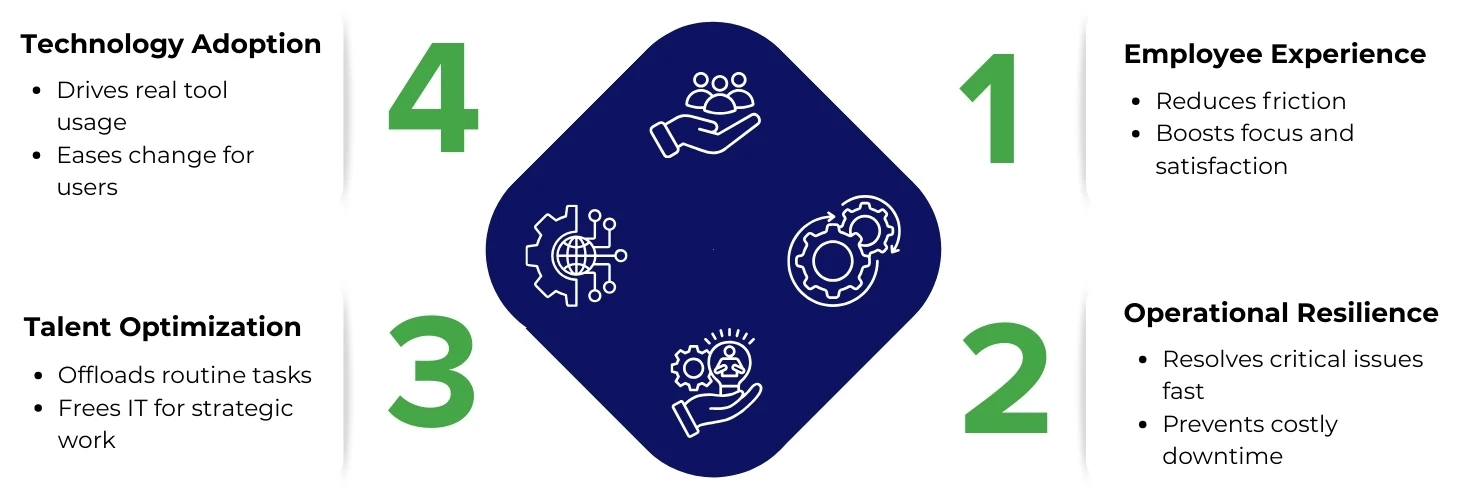
Elevating the Employee Experience: When employees hesitate to contact support due to poor past interactions, productivity losses mount silently. Modern help desks reduce this friction by delivering consumer-grade experiences that empower users to stay focused and effective.
Achieving Operational Resilience: Support teams are now business continuity enablers. As tech stacks grow more complex, organizations need help desks equipped to resolve critical issues fast and prevent downtime.
Liberating Internal Talent: Top IT professionals don’t want to spend their time on password resets. Outsourcing routine support allows in-house teams to focus on innovation, transformation, and value-creating initiatives.
Accelerating Technology Adoption: Technology is only as effective as its adoption. The modern help desk plays a key role in supporting users through change, making new tools usable, not just available.
Three Defining Trends Reshaping the 2026 Help Desk
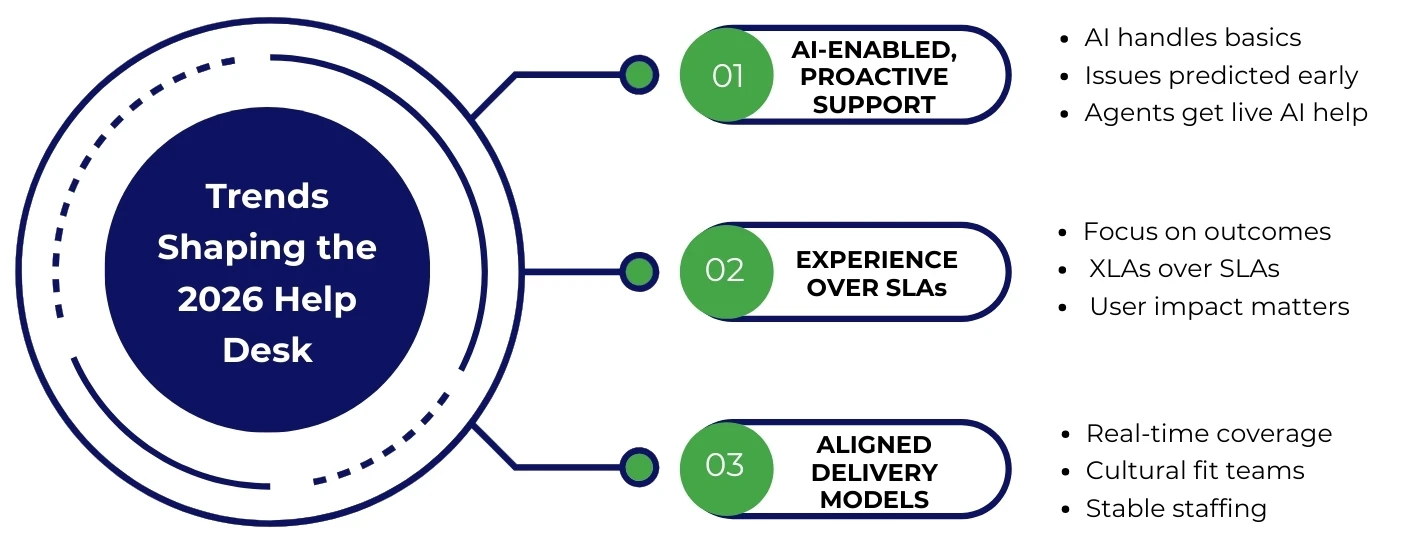
1. The AI-Augmented, Proactive Support Model
AI is transitioning from optional to operational. The goal isn’t to replace human agents but to extend their reach.
- AI-Driven “Tier 0”: Conversational AI will resolve common requests instantly, from password resets to access provisioning.
- Proactive Monitoring: Advanced platforms will track digital employee experience and address issues before users even notice them.
- The Augmented Agent: AI copilots will empower agents with real-time suggestions, summaries, and resolution paths.
2. The Experience-Centric Partnership
The success of IT support is no longer defined by how fast a ticket is closed, but by how little disruption the user experiences. Traditional SLAs measure response time. Experience-Level Agreements (XLAs) focus on what actually matters: satisfaction, continuity, and productivity.
A delayed ticket reassignment can lead to hours of lost work and a drop in user confidence. In contrast, modern help desk partners are evaluated by outcomes like employee net promoter score (NPS), first-contact resolution, and time-to-productivity restoration.
This shift demands more than a transactional vendor. It requires a partner who understands the business context, aligns with workforce expectations, and designs support around the human experience.
3. The Strategic Value of Aligned Delivery
As expectations for IT support mature, mid-market organizations are moving beyond traditional sourcing metrics. The new priority is alignment; building support ecosystems that operate in sync with business workflows, employee expectations, and strategic goals.
- Time Zone Synergy: Overlapping business hours enable faster issue resolution and real-time collaboration on critical support needs.
- Cultural and Communication Fit: Purposeful onboarding and talent matching improve team cohesion, communication flow, and overall user satisfaction.
- Workforce Stability: Consistent staffing and low attrition support deeper institutional knowledge and stronger end-user relationships.
The Premier NX Perspective: Building a Future-Ready Support Model
For most mid-market firms, evolving the help desk into a proactive, AI-enabled function demands sustained investment in platforms, talent, training, and operational redesign. The strategic alternative is a partnership designed to deliver this evolved model from day one.
At Premier NX, our Digital Transformation & IT Ops (DX) service pillar is engineered to provide proactive support functions that align with these 2026 imperatives:
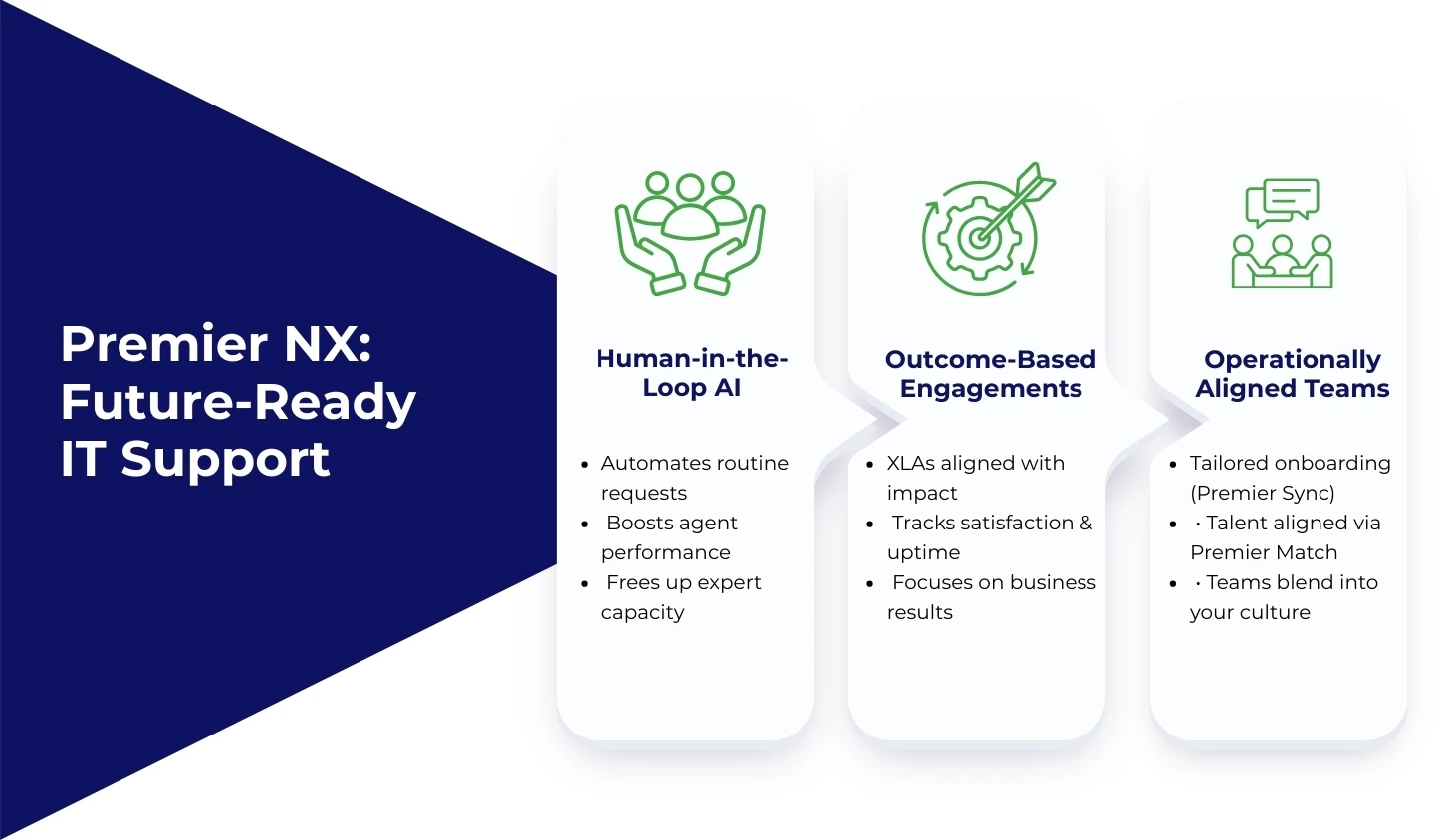
- Human-in-the-Loop AI Integration: From our Innovation Lab to deflect routine tickets and augment specialist agents, focusing your investment on high-value human judgment and empathy.
- Outcome-Based Engagements: Premier’s service models are designed around XLAs with clear metrics for user satisfaction, productivity impact, and operational resilience.
- Operationally Aligned Teams: Using our Premier Sync onboarding framework and Premier Match talent alignment, we embed culturally matched, business-aware teams into your environment from the start.
The result? A help desk that’s not just efficient, but indispensable to your operations.
Case Study: Rebuilding Help Desk Performance Through Structure & Stability
The Challenge
A leading equipment rental platform client faced declining service levels and customer dissatisfaction following a failed BPO engagement. Quality control was absent, and their in-house teams were overwhelmed.
The Approach
Premier NX implemented a structured support model by segmenting responsibilities across specialized roles and introducing formal quality monitoring through scorecards and interaction evaluations.
The Result
The client’s scorecard turned fully green across all lines of business. With stable staffing and improved quality, they regained trust in their outsourced help desk model.
A Question for Strategic Reflection
As the pace of technological change accelerates, IT support is no longer a tactical line item; it’s a lever for operational continuity, employee experience, and competitive resilience.
Mid-market leaders aren’t just outsourcing for cost efficiency; they’re partnering to build capability. They’re prioritizing models that scale, deliver measurable outcomes, and align with business growth.
Is your support function positioned to meet the demands of 2026?