
Key Takeaways
- 1Disconnected HR makes hiring harder to align
- 2Odoo connects recruitment with workforce planning
- 3Cleaner employee data reduces manual handoffs
- 4Better visibility helps teams plan for growth
Odoo HR workflows help mid-market businesses integrate recruitment, employee records, workforce planning, and operations into a single system. The value is not only better HR administration. It is clearer visibility into the people and capacity needed to support growth.
As organisations scale, hiring becomes more than an HR task. It affects delivery timelines, customer commitments, team capacity, and financial performance.
When recruitment, employee data, and workforce planning are in separate systems, leaders struggle to see whether hiring aligns with operational demand.
Odoo addresses this by connecting HR and recruitment workflows to the broader operating model.
Why Does HR Become an Operational Issue?
HR becomes an operational issue when people data is disconnected from how the business runs.
In many mid-market organisations, hiring is handled through separate requests, employee records sit in isolated tools, and workforce planning remains reactive.
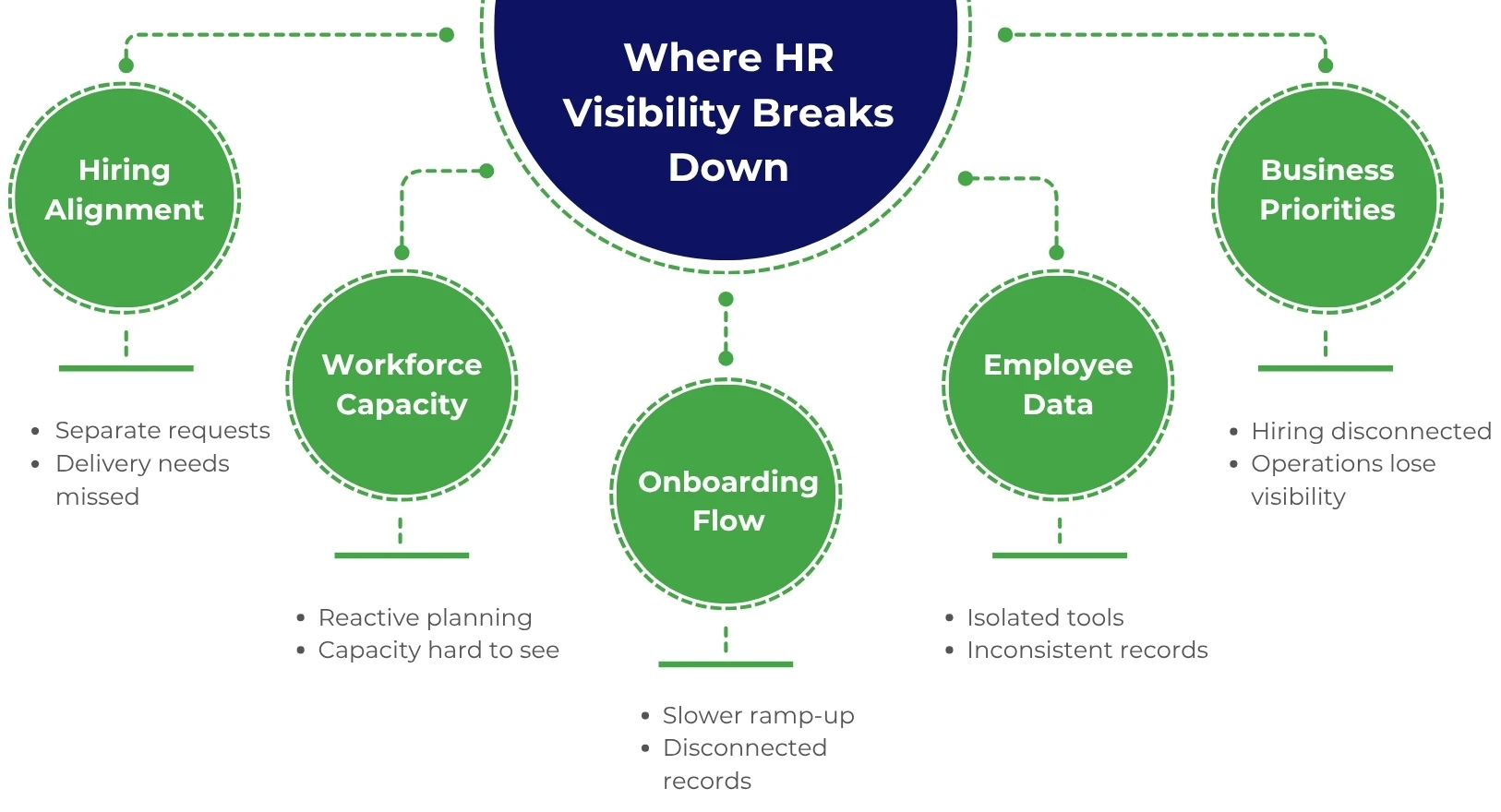
That creates familiar gaps:
- Hiring may not reflect delivery needs
- Workforce capacity is difficult to see
- Onboarding can slow down ramp-up
- Employee data becomes inconsistent
- Teams struggle to connect hiring with business priorities
Everest Group’s research on enterprise platforms reinforces the same point: modern operating models depend on connecting people, processes, and data rather than leaving functions to operate in isolation.
How Does Odoo Connect Recruitment to Business Needs?
Odoo Recruitment helps make hiring more structured and better connected to operational priorities.
Teams can track open roles, candidates, stages, feedback, and timelines in a single system instead of relying on disconnected emails or spreadsheets.
This matters because hiring should reflect business demand. Delivery growth may require specific skills. Sales expansion may create future staffing needs. Operations may need better visibility into capacity before making commitments.
Odoo brings that information closer together so recruitment becomes part of workforce planning, not just position filling.
How Does Odoo Improve Candidate-to-Employee Continuity?
A common HR breakdown happens between recruitment and onboarding.
A candidate may move through one system during hiring, then their information is re-entered elsewhere after selection. That creates delays, duplicate work, and inconsistent employee data.
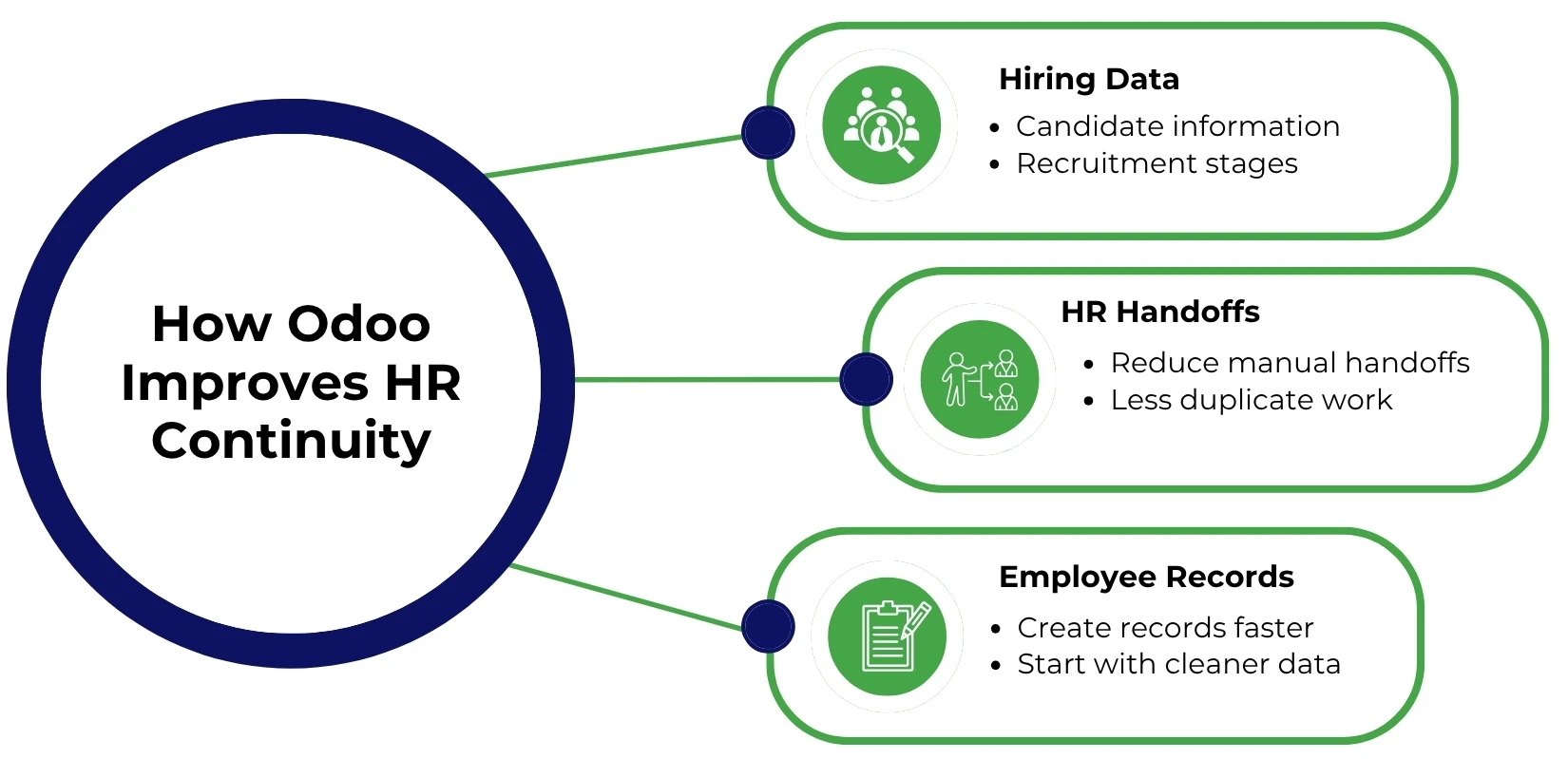
With Odoo, recruitment stages, evaluations, and candidate information can flow more naturally into employee records.
This helps HR teams create records faster, reduce manual handoffs, and start onboarding with cleaner data.
Why Should HR Connect to Delivery and Capacity?
Throughout this Odoo series, I have focused on a practical question for mid-market businesses: how to make Odoo work beyond implementation.
Finance clarity, delivery visibility, integration governance, and post-go-live value all depend on connected data and consistent workflows. HR follows the same principle.
IBM’s explanation of ERP highlights its cross-functional role: ERP connects business processes and data across departments, enabling teams to work from a more unified operating view.
For HR, that matters because projects require people, delivery timelines depend on available skills, and capacity planning affects revenue and client commitments.
What Odoo HR Pitfalls Should Businesses Avoid?
Even with Odoo in place, HR visibility can weaken if workflows are not governed properly.
Common pitfalls include informal hiring outside the system, inaccurate workforce data, inconsistent evaluation steps, and treating HR as separate from operational planning.
The system enables structure, but behaviour determines value. Odoo should reflect how hiring and workforce planning actually support the business.
Building HR and Recruitment Workflows with Odoo
Odoo HR is not just about storing employee information. It is about connecting recruitment, workforce data, and operations so the business can scale with greater clarity.
For mid-market organisations, that connection can be the difference between hiring reactively and building workforce capacity around real business needs.
Looking to improve HR and recruitment workflows in Odoo? Premier NX helps mid-market businesses implement, manage, and improve Odoo so hiring, workforce data, and operational workflows stay better connected as the business grows.
About the Author

Sheraz Chaudhry is Head of Sales, Europe at Premier NX, a leading provider of technology-enabled outsourcing solutions. With a background that includes founding membership at The Resource Group and leadership roles at Nielsen, he brings deep expertise in revenue strategy, partnerships, and data-driven innovation to the leaders he works with today.