

Key Takeaways
- 1Why disconnected systems create operational drag as businesses grow
- 2Why Odoo is gaining traction with UK mid-market businesses
- 3What Odoo’s momentum reveals about the shift toward operational clarity
For many growing UK businesses, the problem is no longer access to software. It is the growing cost of running core functions across too many disconnected systems.
Finance lives in one platform. CRM sits in another. Projects, inventory, HR, and reporting depend on separate tools, manual workarounds, and inconsistent data. At first, that fragmentation feels manageable. Over time, it becomes operational drag.
That is one reason Odoo is gaining more attention.
What Odoo Actually Is
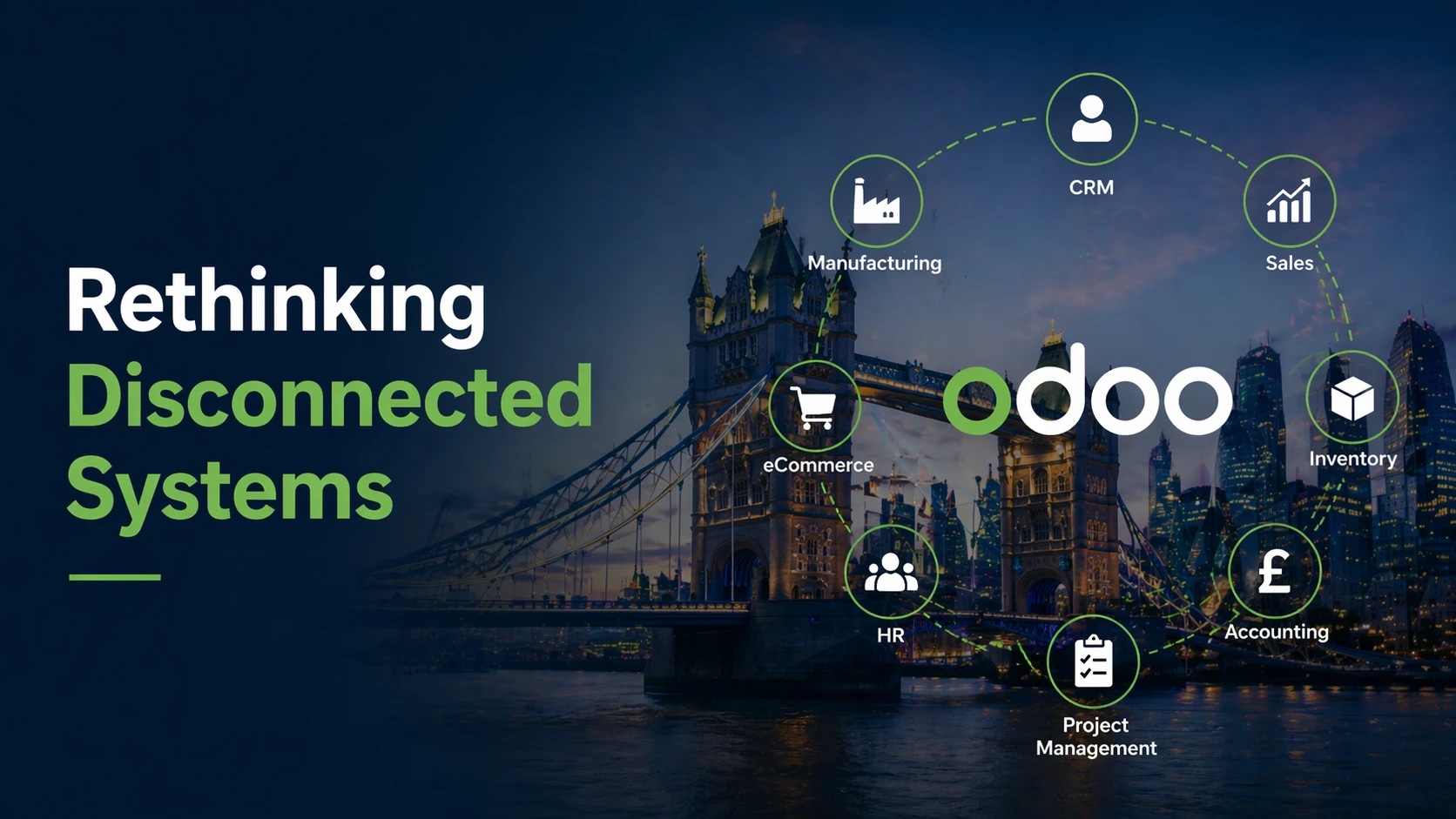
Odoo is an all-in-one business management platform that brings together functions such as CRM, accounting, inventory, HR, eCommerce, and project management into a single system. Instead of operating across multiple disconnected tools, businesses can manage these activities within a more unified environment.
Its modular structure is part of its appeal. Businesses can start with one area and expand over time as needs grow, allowing technology investment to follow operational need rather than forcing a large, all-at-once overhaul.
Why Odoo Is Getting More Attention
Odoo is no longer viewed as a niche ERP option. Its growing adoption, expanding enterprise use, and increasing momentum in the UK market reflect a broader shift in what businesses are looking for from their systems: more connection, more visibility, and less operational fragmentation.
In that sense, Odoo’s rise is not just a software story. It reflects a wider operating-model shift.
Why UK Businesses Are Moving Away from Disconnected Tools
Many UK businesses have built operations in layers: one tool for CRM, another for finance, another for inventory, and others for projects, reporting, or service workflows. That model can work for a while, but growth tends to expose its limits.
The friction usually shows up in familiar ways:
- Duplicated data
- Slower reporting
- Manual handoffs between teams
- Weaker visibility across functions
- Decision-making delayed by system gaps
Why Cost and Complexity Matter
Another reason businesses are rethinking traditional ERP choices is cost. Enterprise platforms can bring heavy licensing, longer implementation cycles, and more complexity than many mid-market firms actually need.
Odoo has gained traction in part because it offers a more accessible model. Lower total cost of ownership, fewer disconnected vendors, and a modular rollout path can make it a more practical fit for businesses seeking to modernize without taking on unnecessary ERP overhead.
For the mid-market, the goal is usually not transformation for its own sake. It is gaining more control, consistency, and visibility without creating a heavier operating burden.
Why This Matters Beyond Software
Businesses do not struggle because software is unavailable. They struggle because execution becomes harder when workflows, data, ownership, and reporting logic are spread across disconnected systems.
That is the more important lens for understanding Odoo. Its value lies not simply in bringing modules together. It gives growing businesses a chance to run with more consistency across sales, finance, service, and operations.
For UK mid-market firms, that shift matters. Many are caught between tool stacks that no longer scale and enterprise platforms that introduce more weight than the business needs. Odoo is gaining traction because it sits closer to that middle ground.
What Odoo’s Momentum Really Reflects
The real question is not whether Odoo is growing. This is why more UK businesses are deciding they can no longer run core operations across disconnected tools.
Odoo is part of that answer because it offers a more unified platform. But the broader lesson is bigger than any one system.
As businesses grow, the issue is rarely software alone. It is whether the business can operate clearly, consistently, and at scale across the functions that matter most. Premier NX helps mid-market businesses implement, manage, and improve Odoo through a structured approach focused on long-term operational value.
Looking at Odoo as part of your next phase of growth?
If you’d like a clearer view of whether Odoo is the right fit for your operating model, you can book a free Odoo readiness assessment with our team. In 45 minutes, we’ll review your current systems, highlight the biggest sources of operational drag, and outline practical next steps.
About the Author

Sheraz Chaudhry
Head of Sales, Europe at Premier NXSheraz Chaudhry is Head of Sales, Europe at Premier NX, a leading provider of technology-enabled outsourcing solutions. With a background that includes founding membership at The Resource Group and leadership roles at Nielsen, he brings deep expertise in revenue strategy, partnerships, and data-driven innovation to the leaders he works with today.