


Key Takeaways
- 1Delivery visibility connects planned work, actual effort, and billing.
- 2Odoo Projects and Timesheets help teams track execution more clearly.
- 3Connected delivery data improves billing accuracy and margin visibility.
- 4Post-go-live value depends on consistent project structure and time tracking.
Odoo delivery visibility means seeing planned work, actual effort, project progress, and billing in one connected system. For mid-market businesses, it helps show how delivery affects revenue, margin, and capacity.
As businesses scale, delivery becomes harder to manage. Projects overlap. Teams work across functions. Billable work expands alongside internal priorities.
What once worked in spreadsheets or lightweight tools can quickly become difficult to track with confidence.
Odoo addresses this by integrating projects, timesheets, planning, and billing workflows into a single operating environment.
Why Do Mid-Market Businesses Lose Delivery Visibility?
Delivery visibility breaks down when project work, time tracking, and financial data are stored in separate systems.
Projects may be tracked in one tool. Time may be logged in another. Billing may depend on a separate workflow.
This creates familiar gaps:
- Project progress is hard to verify
- Time tracking becomes inconsistent
- Billable work may be missed
- Utilisation is difficult to measure
- Teams spend time reconciling data instead of improving delivery
For mid-market businesses, these gaps become more visible as clients, projects, and resource constraints increase.
How Do Odoo Projects and Timesheets Improve Delivery Tracking?
Odoo’s Projects and Timesheets modules bring delivery into a more structured system.
Projects define scope, milestones, tasks, and responsibilities. Timesheets capture the actual effort behind that work.
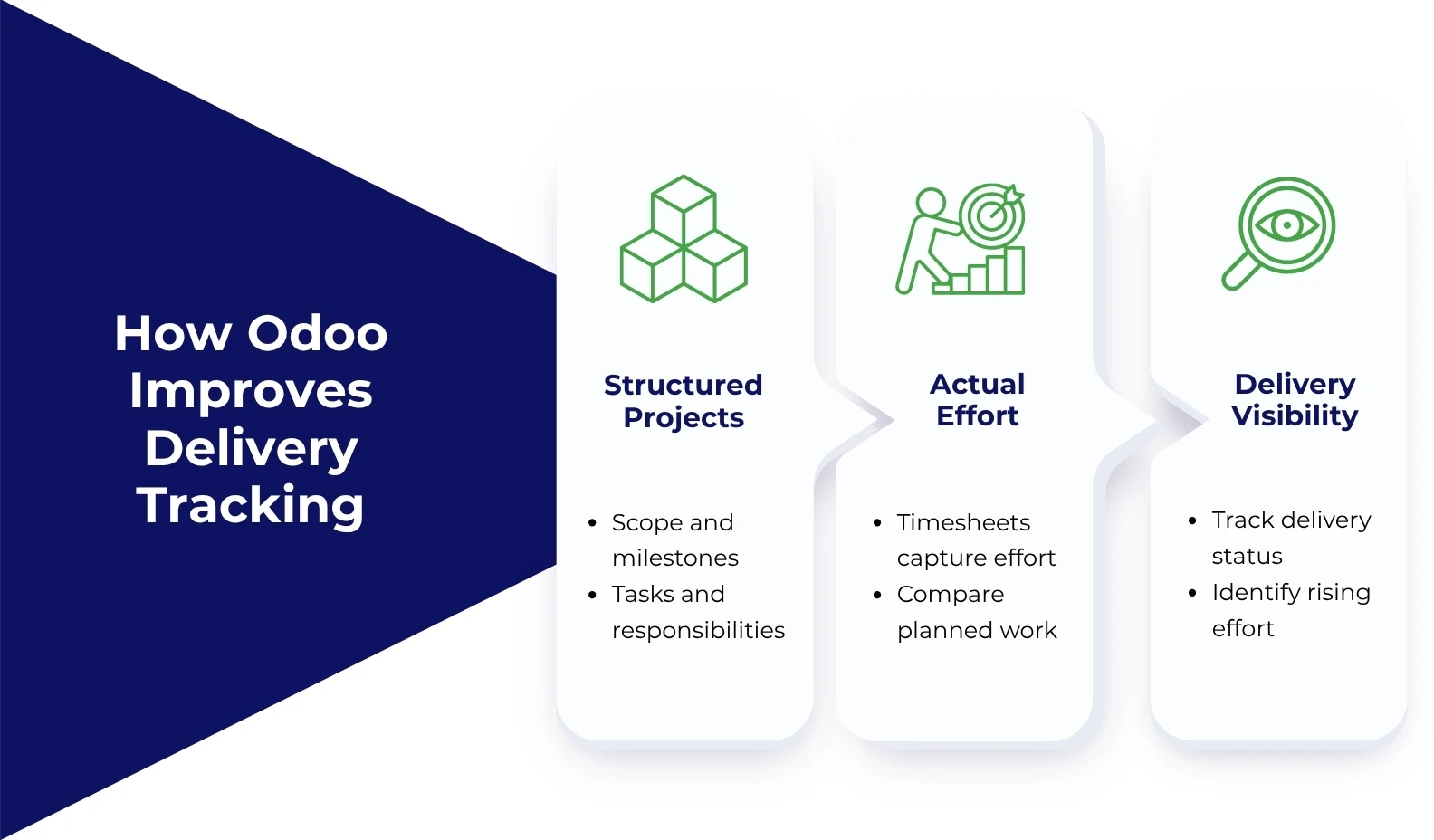
That connection helps teams compare what was planned with what is happening. Managers can see where delivery is on track, where effort is increasing, and where adjustments may be needed.
Instead of relying on offline updates, teams work from a shared structure that reflects how delivery is moving.
How Does Odoo Connect Delivery Work to Billing and Revenue?
Delivery visibility is not only an operations issue. It directly affects billing, revenue, and margin.
When delivery and finance are disconnected, services may be completed without clear tracking. Billing can be delayed or incomplete. Profitability becomes harder to measure.
When projects, timesheets, and invoicing are connected, delivered work can translate more cleanly into billable activity.
That means billing becomes more accurate, margins are easier to understand, and leaders can connect delivery effort to business outcomes.
Why Delivery Visibility Matters After Odoo Go-Live
Throughout this Odoo series, I have focused on a practical question for mid-market businesses: how to make Odoo work beyond implementation. That includes choosing the right platform, carefully sequencing modules, improving financial clarity, and keeping value moving after go-live.
Delivery visibility builds on the same idea: an ERP system should not only be live. It should help the business operate with greater clarity.
For delivery-led businesses, that means knowing what work is underway, how much effort it requires, and whether that effort is billed.
What Delivery Visibility Pitfalls Should Businesses Avoid in Odoo?
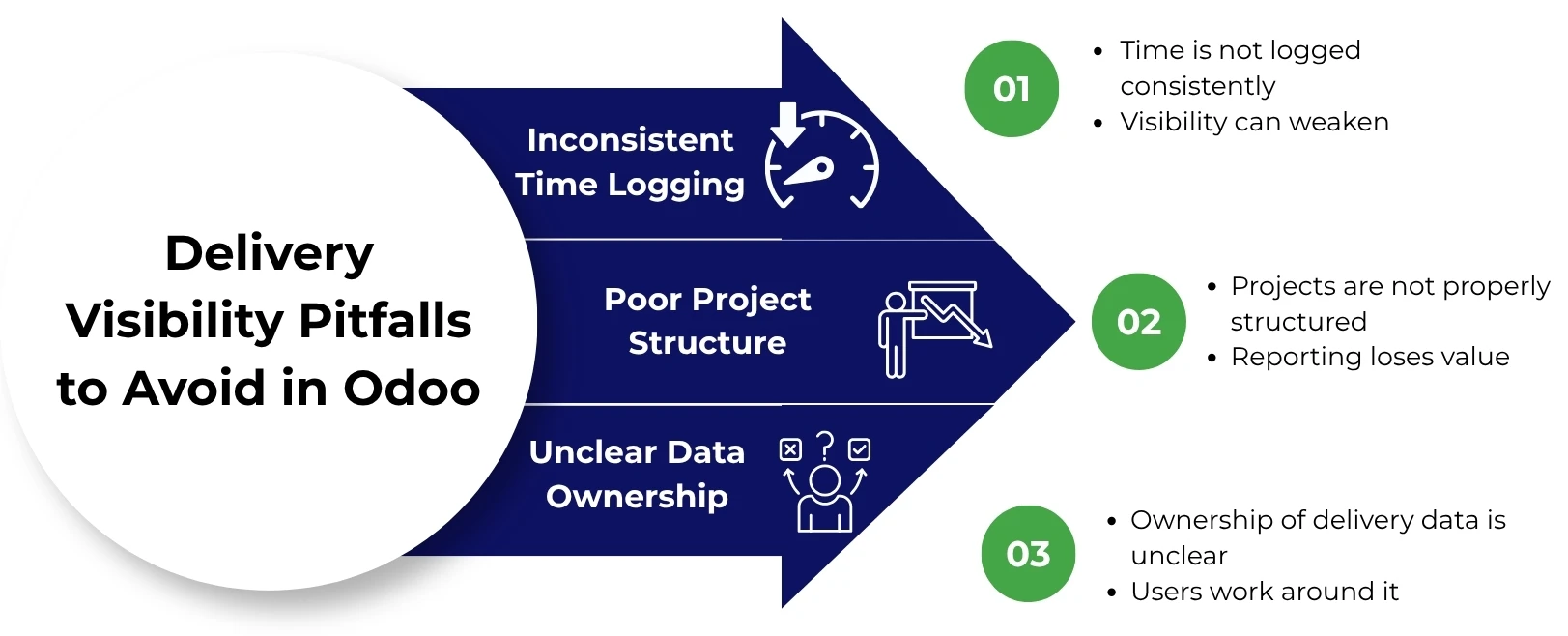
Even with Odoo in place, visibility can weaken if teams do not log time consistently, projects are not properly structured, or ownership of delivery data is unclear.
The system should reflect how teams actually work, not just how a process is documented.
If Odoo is configured too loosely, reporting loses value. If it is too rigid, users work around it.
How Can Mid-Market Businesses Build Delivery Visibility with Odoo?
Delivery visibility is not about tracking more data. It is about connecting planning, execution, and outcomes into one view.
For mid-market businesses, that connection can be the difference between simply completing projects and understanding how delivery performance affects revenue, margin, capacity, and growth.
Looking to improve delivery visibility in Odoo? Premier NX helps mid-market businesses implement, manage, and improve Odoo so that project, timesheet, billing, and reporting workflows work more clearly across the business.
About the Author

Sheraz Chaudhry is Head of Sales, Europe at Premier NX, a leading provider of technology-enabled outsourcing solutions. With a background that includes founding membership at The Resource Group and leadership roles at Nielsen, he brings deep expertise in revenue strategy, partnerships, and data-driven innovation to the leaders he works with today.