


The labor shortage is driven by a mix of demographic shifts, changing worker priorities, skill gaps, and evolving employer expectations, which is creating a global hiring disconnect.
Despite widespread job availability across industries, many organizations are unable to find or retain qualified talent. This isn’t just a temporary trend; it’s a reflection of a workforce that’s reevaluating how, why, and where they work.
What began during the pandemic has now become structural. Aging populations, automation, flexible work demands, and economic uncertainties are reshaping the global employment landscape.
Below, we break down the four most crucial causes of this ongoing labor shortage and how companies are adapting to stay competitive.
Four Major Causes of Labor Shortage
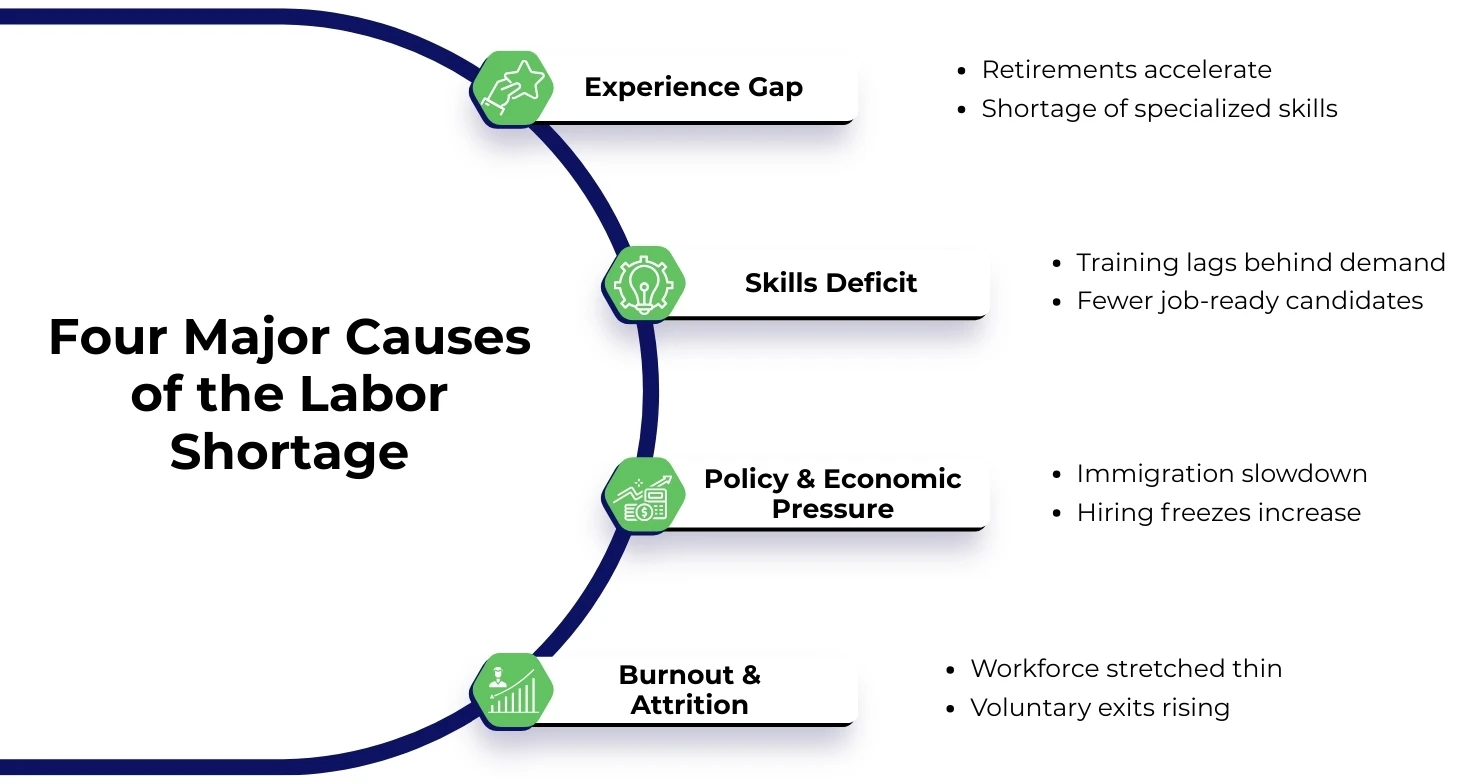
The Experience Gap: Retirements and Missing Skillsets
Many organizations are losing seasoned talent, especially as older cohorts retire and leave behind hard-to-fill positions that require institutional memory or specialized skills. This “experience gap” creates a shortage of manpower at roles where on-the-job learning or deep expertise is essential.
At the same time, younger workers entering the workforce often don’t have the niche expertise employers now demand, particularly in sectors undergoing digital transformation.
The result: even when there are job openings, employers struggle to find candidates with the right mix of experience and current skill set, worsening the talent crunch.
Training Deficit is Limiting Workforce Readiness
The labor shortage is being intensified by a lack of job-ready talent, not just by a shortage of available workers. Many candidates simply haven’t been trained or reskilled for the evolving needs of modern industries.
With the rise of artificial intelligence across various business domains, skill requirements are shifting faster than training systems can keep up. Employers struggle to hire not because people aren’t applying, but because applicants lack the capabilities needed to contribute from day one.
The result: Without proactive upskilling programs, this gap continues to widen, leaving positions vacant despite active hiring efforts.
Economic Pressures and Policy Shifts Are Curtailing Labor Supply
Slower immigration flows and stricter policies are significantly contributing to the labor shortage. The case is not that fewer people want work, but that fewer people are allowed or able to enter and remain in the labor force.
Recent estimates show that net migration in the US in 2025 is close to half a million, down from 2.2 million in 2024.
Moreover, the economic volatility, rising operational costs, and inflation have made companies hesitant to expand headcount or offer competitive packages.
These developments mean that, even with high demand for workers, structural and policydriven barriers are reducing the supply of eligible and available labor.
The result: staffing gaps widen, and many open roles remain unfilled.
Burnout is on the Rise
The push by employers towards the 9-5 grind is also causing massive burnout among existing employees. Taking on extra duties to keep systems running while balancing home and work, employees are discontented and overworked.
The current ones are already on the lookout to switch or quit their existing positions to let go of the stress and search for better opportunities. If not addressed, this would lead to a greater labor shortage in the future.
The result is a workforce that continues to shrink from the inside, even as hiring demand grows.
Turning Talent Gaps into Opportunity: Outsourcing as a Strategic Advantage
One of the most effective ways to counter labor shortage is through strategic outsourcing. By partnering with specialized outsourcing providers that embed within your business and align with your culture, companies can access specialized talent, scale quickly, and maintain business continuity.
Labor shortages represent a systemic shift. For many businesses, persistent hiring challenges have translated into missed revenue, delayed innovation, and declining service standards. Traditional recruiting approaches are too slow to address hard-to-fill roles, especially when internal teams are already operating at capacity.
Outsourcing is a strategic solution not simply to reduce cost, but to regain operational agility. Outsourcing, particularly through specialized co-sourcing models, offers access to trained, culturally aligned teams that can integrate quickly and deliver results without the lag of traditional onboarding cycles.
Addressing Workforce Gaps with Premier NX
In a tight labor market, organizations need flexible solutions that support continuity without adding complexity.
Premier NX offers a co-sourcing model that complements your internal teams and bridges hiring gaps with efficiency and alignment. Rather than replacing operations, we integrate where support is needed, mostly, capability, not just capacity.

Our approach includes:
- Co-sourcing delivery that mirrors your internal processes to ensure cultural fit and seamless collaboration
- Access to distributed talent across multiple global locations for round-the-clock support and operational resilience
- Premier Sync Framework that enables collaborative planning, streamlined onboarding, and shared accountability
- Role-specific staffing across industries, with emphasis on knowledge-based and customer-facing functions
Rethink Talent. Realign Strategy.
Workforce challenges aren’t going away but how you respond can define your competitive edge. If traditional hiring slows your momentum, it’s time to explore alternatives.
Premier NX offers a strategic path forward, rooted in partnership, built for resilience.
About the Author
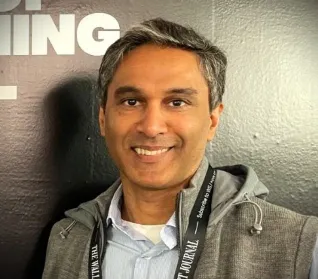
As CEO, Ali Din oversees the overall strategy and direction for Premier NX. With senior leadership roles at global HR and recruiting platforms, Indeed and ADP. Ali has over 25 years of experience in the IT and advanced technology sector. Ali’s time is focused on transformation in the business, both for professional development and for clients, to enhance business outcomes.