


Key Takeaways
- 1Choose a provider that delivers financial insight, not just transaction processing.
- 2Look for the right balance of automation, human judgment, and financial control.
- 3Make data accuracy, connected workflows, and real-time visibility non-negotiable.
- 4Select a partner that can strengthen finance today and scale with the business tomorrow.
Accounting and bookkeeping outsourcing is no longer a decision about where work gets done. It is a decision about how effectively the finance function can protect enterprise value, improve decision velocity, strengthen control, and support growth.
The distinction between providers is therefore not about transactional capacity but about strategic contribution. The right partner should improve the integrity, visibility, and responsiveness of finance operations while giving leadership greater confidence in the numbers, the controls, and the decisions that follow.
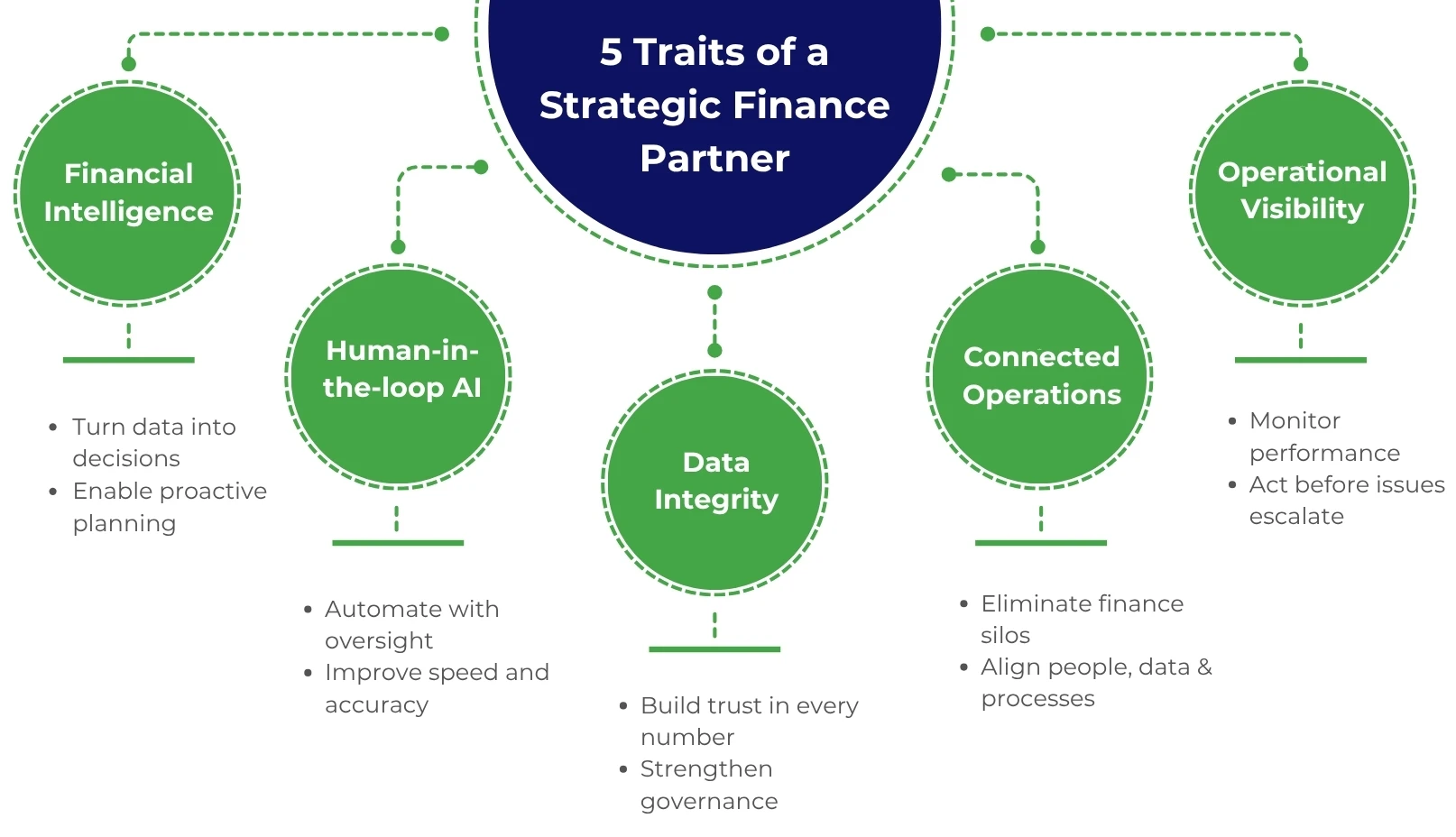
Strategic finance begins with choosing the right partner.
1. Financial Insights & Business Intelligence: Looking Beyond Standard Reports
Financial reporting explains what happened. Business intelligence helps leaders understand why it happened, what may happen next, and where action is needed.
Why it matters:
Finance leaders rely on timely, actionable insights to improve planning, monitor performance, and respond to changing business conditions.
A strong outsourcing provider should turn accounting data into practical insight by helping you:
- Track revenue, costs, cash flow, and operational trends
- Identify performance drivers and financial risks
- Build dashboards around decision-critical KPIs
- Improve forecasting and management reporting
2. Human-in-the-Loop Finance Operations: Balancing AI with Financial Expertise
Human-in-the-loop finance combines automation with oversight from trained finance professionals.
Artificial intelligence and workflow tools can accelerate invoice processing, reconciliations, data entry, and reporting. However, financial operations still require judgment, exception handling, validation, and awareness of regulatory requirements.
Why it matters:
Finance processes require oversight, validation, and informed decision-making that technology alone cannot consistently deliver.
Look for a provider that can:
- Automate repetitive, rules-based activities
- Escalate unusual transactions for review
- Validate outputs before reports are finalized
- Maintain accountability for financial accuracy
3. Financial Data Integrity: Building Confidence in Every Decision
Financial data integrity means financial information is accurate, complete, consistent, and traceable. Poor-quality data can create reconciliation problems, reporting delays, compliance exposure, and unreliable forecasts.
Why it matters:
Inaccurate or inconsistent financial data can undermine reporting quality, increase operational risk, and delay critical business decisions.
Ask prospective providers how they:
- Detect and correct errors
- Standardize finance processes
- Manage reconciliations and exceptions
- Document controls and approval workflows
- Protect sensitive financial information
4. Connected Finance Operations: Integrating Accounting with the Business
Connected finance operations integrate accounting with procurement, treasury, reporting, customer operations, and broader business workflows.
When finance functions operate in isolation, organizations experience duplicate work, delayed approvals, inconsistent data, and limited visibility. A capable outsourcing partner should understand how each accounting activity affects upstream and downstream processes.
Why it matters:
Disconnected finance processes create inefficiencies, duplicate work, and limit organizational visibility.
5. Operational Visibility: Looking Beyond Month-End Reporting
Month-end reports provide historical performance, but finance leaders also need visibility into ongoing operations. Access to real-time operational metrics enables faster responses, better resource planning, and more proactive financial management.
Why it matters:
Limited operational visibility makes it harder to identify bottlenecks, monitor performance, and address issues before they impact business outcomes.
Your provider should offer access to relevant metrics such as:
- Invoice and transaction volumes
- Processing turnaround times
- Reconciliation status
Choose a Finance Partner Built for What’s Next
The right accounting and bookkeeping outsourcing decision should strengthen how finance supports the business, not simply shift where the work is performed. The strongest partnerships improve the quality, speed, and strategic value of financial information across the organization.
Premier NX helps businesses build more intelligent finance operations by combining financial expertise, business intelligence, and human-in-the-loop technology within a connected delivery model.