


Key Takeaways
- 1As customer demand grows, CX needs structure instead of reactive support.
- 2A scalable model creates clear paths for requests, ownership, and escalation.
- 3Automation improves speed, while human judgment protects trust and loyalty.
- 4With visibility and control, CX can scale without adding unnecessary complexity.
A scalable customer experience model is not a larger support team or a collection of technologies. It is an operating structure that helps organizations manage growing customer demand without losing visibility, consistency, or customer trust.
As companies grow, customer experience becomes more difficult to manage. More customers, more channels, and more exceptions create complexity that can quickly overwhelm processes that once worked well. The organizations that scale successfully are not necessarily the ones with the most resources. They are the ones with the most intentional design.
A Scalable CX Model Creates Structure Around Demand
Most customer experience problems appear as service issues. In reality, they are often operating model issues.
As demand increases, leaders need to understand how customer interactions move through the business. They need visibility into where requests originate, how they are prioritized, who owns resolution, and when escalation is required.
Without that structure, customer experience becomes increasingly dependent on individual effort. Teams work harder, but outcomes become less predictable.
A scalable model creates clear pathways for customer demand, enabling the business to grow without losing control.
Is Your CX Operation Built to Scale?
Many CX leaders believe they have a capacity problem when they actually have a visibility, prioritization, or workflow problem.
If customer demand continues to grow, can your current operating model keep pace without increasing complexity, slowing response times, or weakening customer trust?
Our complimentary CX Scalability Assessment helps identify where customer interactions slow down, where escalation paths become unclear, and whether your support structure is designed for sustainable growth.
What You’ll Learn:
- How customer demand moves through your organization
- Where friction, bottlenecks, and delays occur
- Whether work is reaching the right teams
- How prepared your CX operation is for future growth
The Best CX Models Balance Automation and Human Judgment
Many organizations view scalability primarily through the lens of automation.
Automation is important, but a scalable customer experience is not about removing people from the process. It is about deciding where technology improves efficiency and where human judgment remains essential.
Balancing Automation and Human Judgement
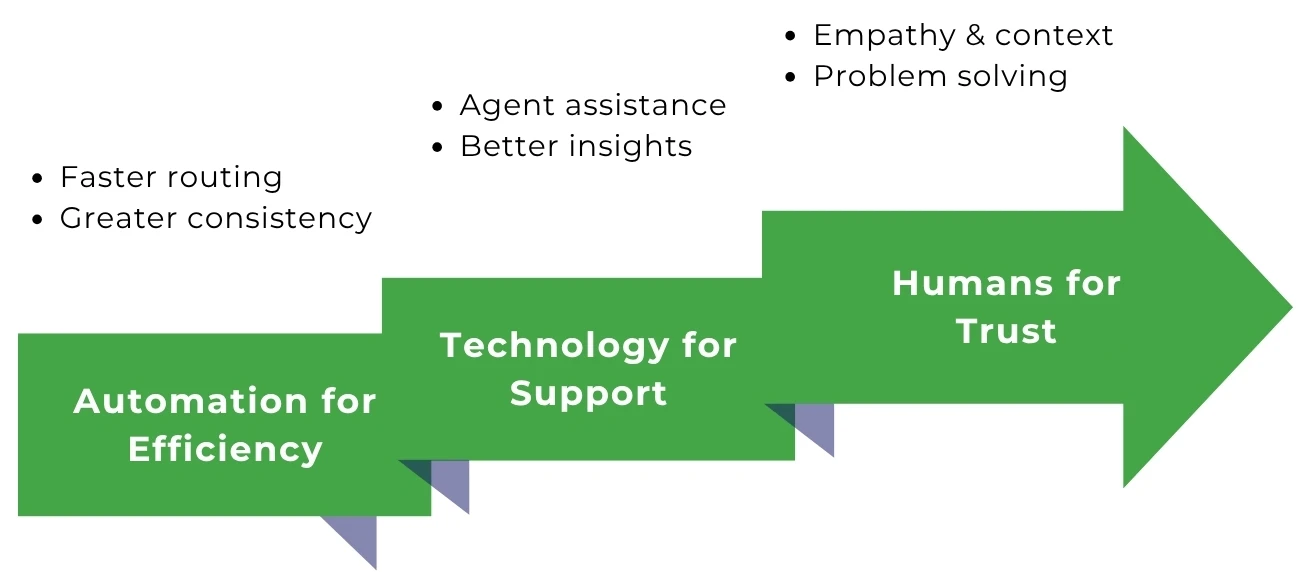
The most effective organizations use automation to support the interaction rather than replace it. Routing, knowledge surfacing, agent-assist tools, quality monitoring, and trend analysis can all improve speed and consistency.
Human involvement remains critical when interactions require context, empathy, problem-solving, or customer trust.
The goal is not maximum automation. The goal is the right balance between efficiency and judgment.
Scalable CX Requires Visibility and Control
Not every customer interaction carries the same level of urgency, complexity, or business impact.
A billing question, a strategic account issue, and a product escalation may arrive through the same channel, but they should not follow the same path.
High-performing CX operations classify demand early, route work intentionally, and give leaders visibility into how customer issues move through the organization.
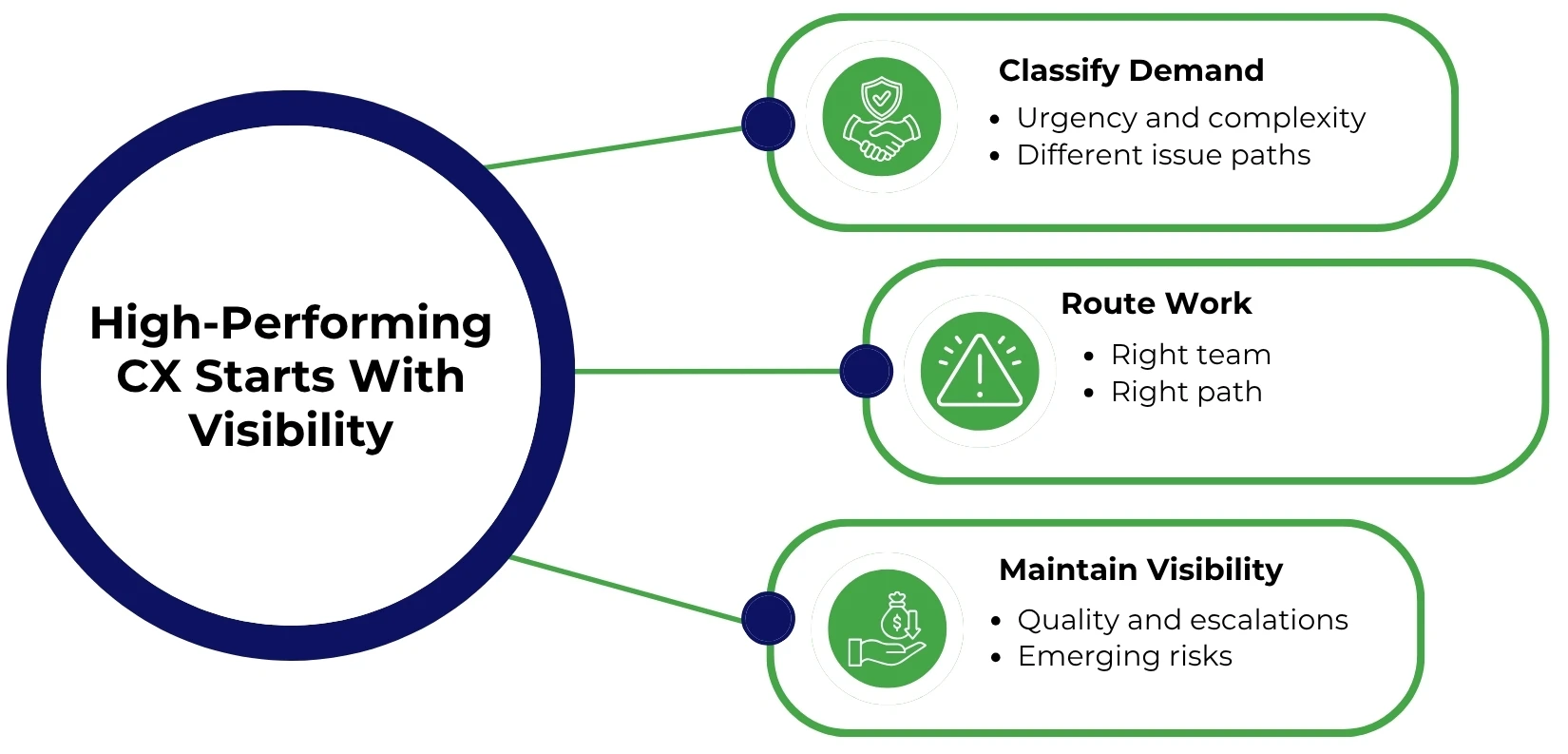
As customer volume grows, governance becomes increasingly important. Leaders need a clear view of service quality, escalation trends, operational performance, and emerging customer risks.
Without visibility and accountability, CX becomes reactive. With them, organizations can identify problems earlier, prioritize improvements more effectively, and maintain consistency as they scale.
Enterprise-Level CX Without Enterprise Complexity
For mid-market organizations, scalability is not about replicating a large enterprise support organization.
The objective is to create enough structure to support growth while maintaining agility and responsiveness.
Premier NX supports this through AI-infused customer experience services that combine multichannel customer care, customer retention support, agent-assist capabilities, knowledge management, and human-in-the-loop execution.
The focus is on practical application rather than technology for its own sake. Technology should improve efficiency and consistency, while people remain responsible for the interactions that shape customer trust and loyalty.
Assess Whether Your Customer Experience Model Is Ready for Growth
Growth exposes the design behind customer experience.
A scalable customer experience model provides more than additional support capacity. It creates visibility into demand, establishes accountability, improves prioritization, and helps organizations maintain service quality as complexity increases.
Our complimentary CX Scalability Assessment evaluates how customer interactions move through your organization, where friction exists, and whether your workflows, reporting structure, escalation paths, and support model are built for long-term growth.
We’ll provide a high-level assessment and practical next steps tailored to your business objectives.