


For the mid-market CFO, the journey toward a more efficient financial close is often a process of elimination. Many leaders begin by exploring the two most familiar options: hiring more staff or investing in finance automation tools.
Yet, as we’ve discussed, these paths often lead to a common stalemate. New hires join a struggling process, and promising technology falls into the “pilot trap”—failing to deliver because it’s layered onto a team that already lacks the operational bandwidth to manage it.
This brings us to a critical insight for modern finance leaders: Technology is not a substitute for strategy; it is its amplifier. For mid-market companies, the most significant barrier to a faster financial close isn’t a lack of advanced tools, but a lack of the bandwidth and collaborative structure required to use them effectively. The real power of AI in finance is realized not in isolation, but when it acts as a force multiplier for a well-aligned, strategically focused team.
The Collaboration Imperative: Breaking Down Silos
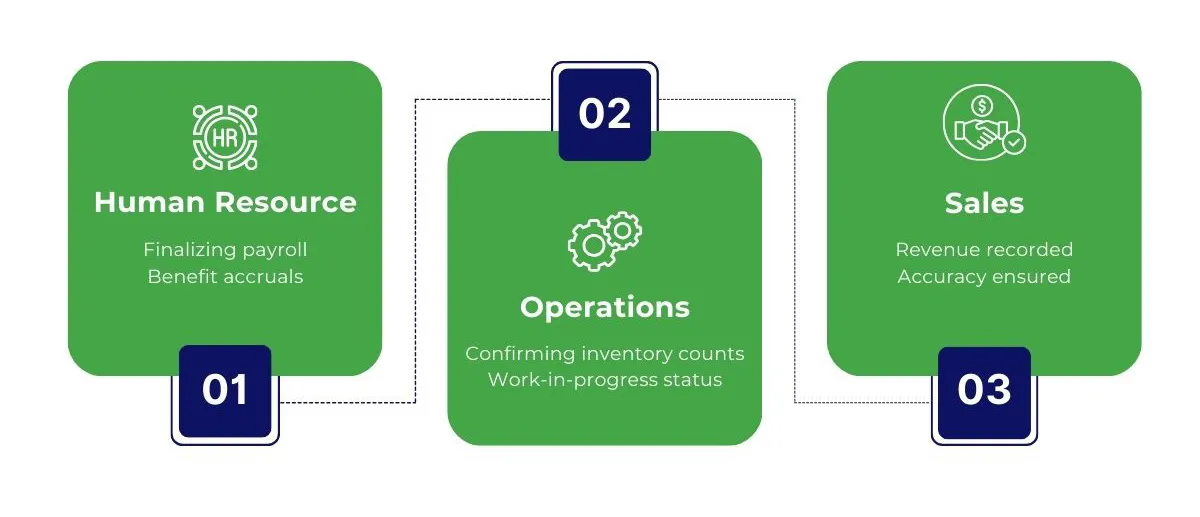
An efficient close is not solely a financial activity. It is a company-wide endeavor. Delays often stem from bottlenecks in other departments:
- HR: Finalizing payroll and benefit accruals.
- Operations: Confirming inventory counts and work-in-progress status.
- Sales: Ensuring all revenue for the period is accurately recorded.
The organizations that close in 10 days aren’t just using better software; they have mastered the art of cross-functional collaboration.1 They have clear protocols, shared timelines, and a culture of accountability that ensures every department understands its role in the record-to-report process.
Creating the Bandwidth for Innovation
Before AI can analyze variances, your best people need the time to review its findings. Before automation in finance can reconcile accounts, your team must be freed from manually chasing down missing invoices.
This is the fundamental challenge. You cannot ask a team drowning in transactional work to also architect, implement, and manage a new technological paradigm. The first step toward an AI-ready finance function is often creating the operational bandwidth for your team to think strategically.
This is where a foundational finance and accounting outsourcing partnership shows its value. By providing a seamless extension of your team to manage core, time-consuming functions—accounts payable, receivables, reconciliations—you accomplish two things at once:
- You immediately stabilize and accelerate your core financial close process.
- You liberate your in-house experts to focus on higher-value work, including the evaluation and integration of new technologies like AI.
This is the true multiplier effect: a partner handles the operational load, empowering your team to leverage AI technology for insight, not just efficiency.
A Question for Reflection
Examine your last quarterly close. How much time did your senior staff spend coordinating with other departments and chasing information versus analyzing the data once it was finally assembled?
The Path Forward: Human-in-the-Loop and Technological Enablement
The goal is not a fully autonomous finance department. The goal is a seamlessly orchestrated one, where technology handles repetitive tasks and humans provide oversight, exception handling, and strategic interpretation.
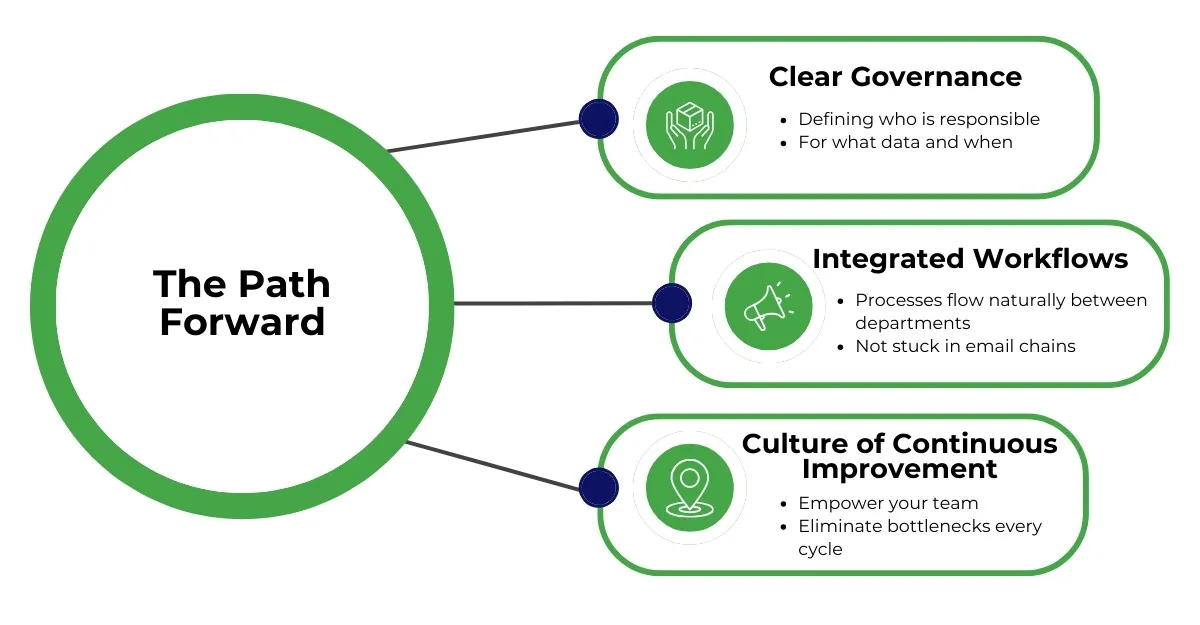
The CFO’s role evolves from manager of a process to architect of a system. This requires:
- Clear Governance: Defining who is responsible for what data and when.
- Integrated Workflows: Designing processes that flow naturally between departments and systems, not ones that end in email chains.
- A Culture of Continuous Improvement: Empowering your team to identify and eliminate bottlenecks every cycle.
In our next post, we will examine how this evolution changes the CFO’s role from a steward of historical data to an architect of future growth.
Is your team structured to act as a multiplier for new technology? We help mid-market leaders create the operational stability required to innovate.
About the Author
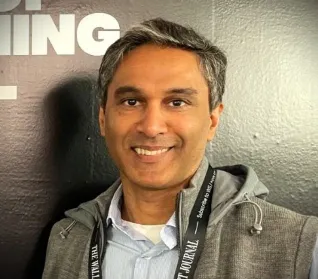
As CEO, Ali Din oversees the overall strategy and direction for Premier NX. With senior leadership roles at global HR and recruiting platforms, Indeed and ADP. Ali has over 25 years of experience in the IT and advanced technology sector. Ali’s time is focused on transformation in the business, both for professional development and for clients, to enhance business outcomes.