
I Went to a Hardware Show and Found the Future of AI
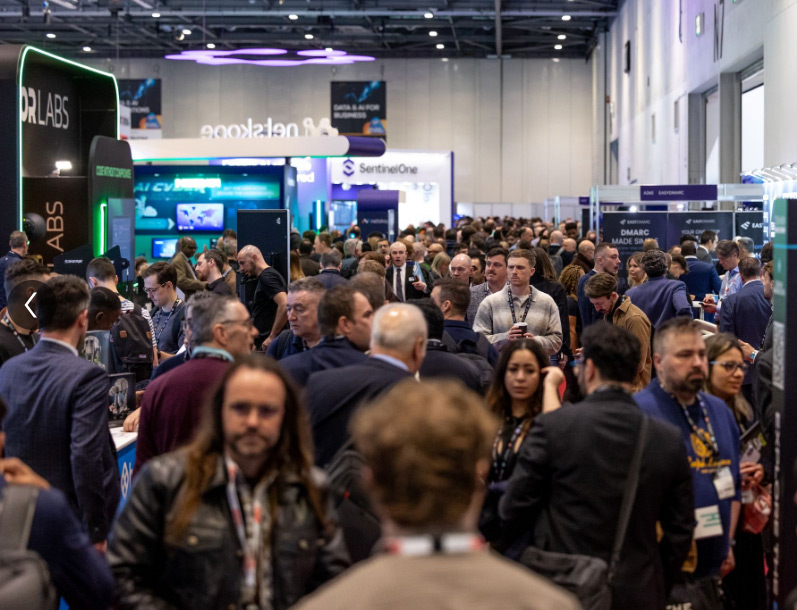
Walking into Tech Show London at ExCeL, I’ll be honest: I thought I might be in the wrong place. The exhibition floor was a sea of cooling towers, server racks, and industrial cabling. This was not a services conference. This was an infrastructure show.
But the best insights often hide where you least expect them. By the end of the day, I realized the hardware-dominated floor was telling a more honest story about where enterprise technology is headed than any services pavilion could have.
Why AI Workloads Are Straining Physical Infrastructure
You cannot walk past a Vertiv cooling system and still believe digital transformation is just about code. The physical infrastructure underneath the cloud is massive, expensive, and increasingly strained.
AI adoption at scale is driving this. AI workloads are insatiable. They need computing, cooling, and data centers that barely existed five years ago. Industry analysts confirm that infrastructure scalability is now a critical constraint.
One conversation made it concrete. Energy efficiency in data centers is no longer a sustainability talking point. It is a hard cost constraint. Companies are redesigning infrastructure because their electricity bills are eating into margins.
The implication for most organizations is uncomfortable: this is not a problem you can throw a few engineers at. It requires deep, specialized expertise that is scarce and expensive. The companies winning this battle are not necessarily the ones with the biggest budgets. They are the ones who have admitted they cannot build and run this infrastructure alone.
The AI Conversation Has Matured
The AI sessions felt different this year: less magic, more mechanics. Professor Hannah Fry spoke about the gap between what algorithms promise and what humans actually do with them. Practitioners from William Hill walked through the grind of MLOps. Keeping a model accurate in production is harder than building it in a notebook. Data drifts. Assumptions break.
The companies winning with AI are not the ones with the smartest data scientists. They have the most boring, reliable infrastructure. Recent research reinforces this: the biggest reason AI projects stall is data fragmentation, with up to 90% of enterprise data trapped in unstructured silos.
Here is the hard truth: cleaning, unifying, and maintaining that data foundation is not core to most businesses’ work. Retailers sell clothes. Banks manage money. Manufacturers build things. None of them got into business to become data engineering shops. Yet AI demands exactly that. The organizations making real progress are the ones that have found partners to handle the foundation so they can focus on outcomes.
Platform Engineering: The Evolution of DevOps
There was a session titled Why Ops Says No and Other Myths. Anyone in technology knows this tension. Developers want speed. Operations wants stability. Both are right.
The emerging answer is platform engineering. Build an internal platform that gives developers guardrails rather than gates. Let them move fast, but within a lane that keeps the system stable. It is not glamorous. It is the work that makes speed sustainable.
But building a platform takes focus. It requires teams to step back from daily firefighting and invest in tooling, automation, and standardization. Most IT organizations are too underwater to do this well. Those who succeed often have external help in building the scaffolding so their internal teams can focus on what actually matters to the business.
Why Zero-Trust Security Is Now Non-Negotiable
Security is no longer an IT conversation. It is a business conversation. Boardrooms are waking up to the fact that a breach is not a technical incident. It is a brand incident, sometimes an existential one.
Zero-trust architecture was the phrase on everyone’s lips. In a world where employees work anywhere, contractors come and go, and machines talk to machines, knowing who is doing what is the only control that matters.
Even traditional industries are on the front lines. Experts predict that by 2026, over 60% of organizations will rely on AI-augmented security platforms.
But here is the gap no one talks about: zero-trust is not a product you buy. It is a discipline you practice. It requires constant vigilance, continuous monitoring, and rapid response. Very few organizations have the bench strength to do this well in-house. The ones who sleep soundly at night are those who have extended their teams with partners who eat, sleep, and breathe security.
The Partner-Shaped Hole in Enterprise IT
Across every conversation, the same gap appeared. Companies have the strategy, the ambition, the budget. What they lack is the operational depth to execute.
RED Engineering built its own solution because it could not find the right partner. Other organizations are hiring frantically, trying to buy their way out of complexity. Neither approach scales.
This is the partner-shaped hole. Vendors sell tools. Consultants sell reports. What enterprises need is someone to run the machine so they can focus on the mission.
The organizations I met in London understand their industries better than anyone. What they need is someone to handle the rest.
The Partner You Actually Need
If you have read this far, you have probably noticed a pattern. AI needs reliable infrastructure. Data needs constant cleaning. Platform engineering needs sustained execution. Security needs continuous operation.
None of these is a one-time project. They are ongoing capabilities. And none of them is what you got into business to do.
The organizations that master them will not be the ones with the biggest budgets or the smartest individual hires. They will be the ones who admit they cannot do it alone and find the right partner to share the weight.
At Premier NX, that is all we do. We build the data foundation for AI. We keep cloud infrastructure running. We embed security from the start. It is not the work that gets attention. It is the work that makes everything else possible.
If any of this resonates, whether you are wrestling with AI infrastructure, cloud cost optimization, or cybersecurity resilience, I would welcome the chance to continue the conversation. Sometimes the hardest part is admitting you do not have to figure it out alone.
Note of Appreciation: Thank you to Muhammad Naveed Saeed at Uptime Institute for the warm conversation. And to everyone who made time amidst a busy show floor, your openness about real challenges is what makes these events worthwhile.
About the Author

Sheraz Chaudhry
Head of Sales, Europe at Premier NXSheraz Chaudhry is Head of Sales, Europe at Premier NX, a leading provider of technology-enabled outsourcing solutions. With a background that includes founding membership at The Resource Group and leadership roles at Nielsen, he brings deep expertise in revenue strategy, partnerships, and data-driven innovation to the leaders he works with today.