

Seasonal demand can be one of the most valuable periods in a consumer business. Orders increase, customer activity rises, and a greater share of annual revenue may be concentrated into a relatively short window.
That concentration also changes what the customer operation has to manage.
A model that performs well through normal trading periods may face a very different mix of workloads during holidays, promotions, or other high-demand events. Customer inquiries rise alongside order activity. Retention becomes more commercially important. Management teams need enough visibility to understand where service issues could begin affecting revenue.
For one national eCommerce brand, this created an opportunity to rethink how customer operations supported peak demand.
Seasonal Growth Changes the Operating Requirements
The usual response to higher customer volume is to increase capacity. In some cases, that is exactly what is required.
But capacity is only one part of the equation.
When demand changes quickly, businesses also need to consider where that demand is coming from, whether the operation can adjust, and how effectively customer interactions support the business’s commercial priorities.
For example, cancellation activity may deserve more attention during a peak revenue period than during a typical month. A service issue that would normally have a limited effect can become much more material when multiplied across a higher volume of customers.
The same applies to management visibility. Historical reports are useful, but during a compressed trading period, leadership needs to know where performance is shifting while there is still time to respond.
The client in this story was already operating through major seasonal events. The opportunity was to make the customer operation more adaptable as those periods grew more important and complex.
What CX and Operations Leaders Should Know
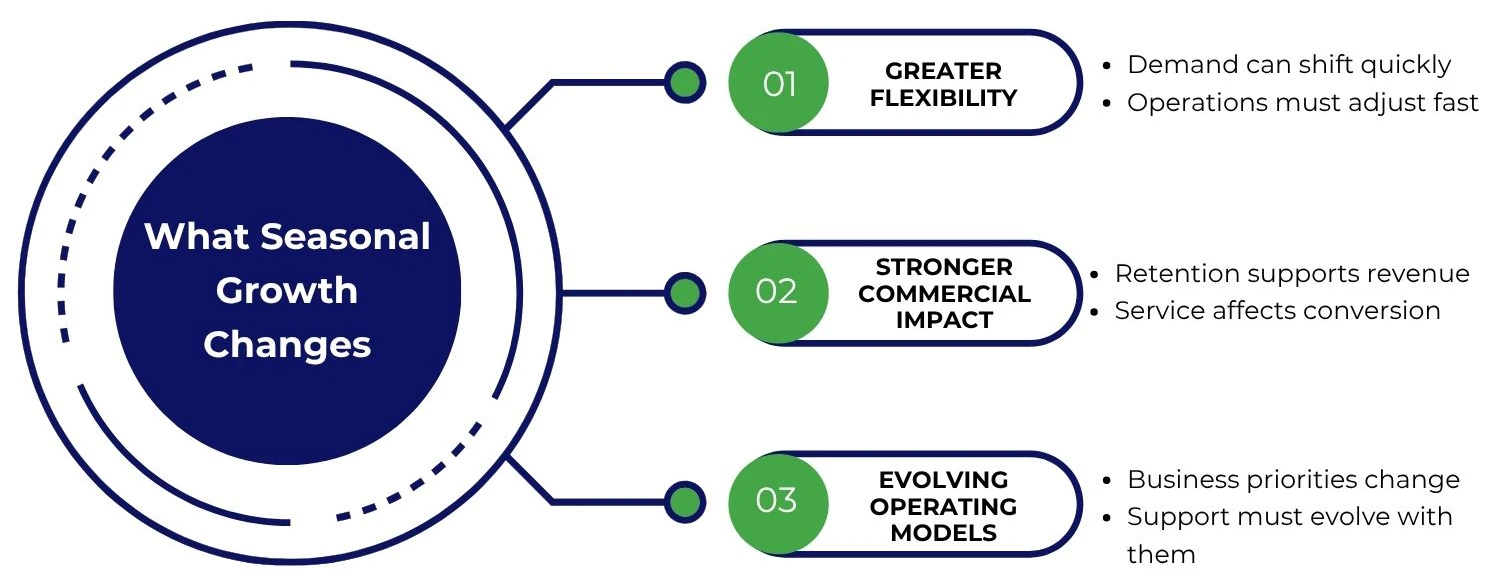
1. Seasonal growth can change what customer operations need to deliver.
Higher demand may require greater flexibility and visibility, not simply more capacity.
2. Customer operations can have a direct commercial impact.
Retention, service quality, and execution can influence how much demand converts into revenue.
3. Operating models should evolve as business conditions change.
The right partner helps adapt the operation around new priorities rather than simply expanding the existing scope.
Customer Operations Can Carry More Commercial Responsibility
This is where the relationship between an organization and its operating partner becomes important.
A defined service scope tells a provider what work needs to be completed. A deeper partnership creates room to look at how that work connects to the priorities around it.
In this case, Premier NX worked with the client over time as the customer operation evolved. The focus expanded beyond day-to-day execution to areas that more directly affected customer retention, revenue performance, quality, and readiness for peak periods.
That evolution is important because customer experience does not sit separately from commercial performance.
A customer who completes an order, stays rather than cancels, or receives effective support during a critical buying period affects more than a service metric. Those interactions contribute to the economics of the customer relationship.
The strongest operating models recognize that connection and give teams enough flexibility and visibility to respond accordingly.
The Results Show What That Can Mean in Practice
The engagement produced measurable commercial outcomes:
- $4.54 million in tracked revenue
- 225% ROI
- 48% reduction in the cancellation rate, from 25% to 13%
The client also gained greater flexibility across its customer-facing operations, helping the business respond to changing demand during key seasonal periods.
These results matter because they show the value of treating customer operations as part of the business model, rather than viewing them only through measures such as contact volume or staffing requirements.
Premier’s relationship with the organization also developed beyond the original operating scope. The engagement became a broader partnership covering revenue improvement, quality, workforce planning, and ongoing optimization.
Read the Client Success Story: Turning Seasonal Demand Into a Revenue Growth Opportunity
The Same Issue Can Appear Outside Seasonal Businesses
Seasonality makes demand changes particularly visible, but similar pressure can develop for other reasons.
A successful promotion can quickly change contact volumes. A product launch may create an unfamiliar mix of customer questions. Rapid growth can place new demands on processes that worked perfectly well at a smaller scale. Acquisitions and channel changes can have the same effect.
In each case, the existing operation may still be performing as designed. The business around it has simply changed.
That distinction matters for leadership teams deciding what to do next. Adding capacity may be appropriate, but it should follow an understanding of where the pressure is coming from and what business outcome the operation needs to support.
Premier NX works with clients in that context: as an extension of their teams, with the operating model shaped around business requirements rather than a fixed definition of support.
For this eCommerce brand, that partnership contributed to stronger retention, greater operational flexibility, and measurable revenue performance during periods when those outcomes mattered most.
See the results and the operating journey behind them.