

Key Takeaways
- 1Track CSAT, NPS, FCR, Customer Contact Rate, and Churn Rate to gain a complete view of customer experience performance.
- 2Use these metrics to identify service gaps, reduce preventable support demand, and improve resolution efficiency.
- 3Connect customer experience insights with retention and loyalty goals to strengthen long-term growth.
- 4Turn measurement into action by prioritizing the operational improvements with the greatest business impact.
Consumer Packaged Goods (CPG) brands have more customer data than ever before, but more data doesn’t always lead to better decisions. Many organizations track dozens of customer experience CX metrics without knowing which ones have the greatest impact on customer loyalty, operational performance, and long-term growth.
Forrester’s 2025 Total Experience research found that organizations that align their brand and customer experience can achieve up to 3.5× higher revenue growth while strengthening customer retention and loyalty.1
The most valuable CX metrics reveal where friction exists, how efficiently customer interactions are managed, and where operational improvements can deliver measurable business outcomes.
Why CPG Brands Need a Focused CX Measurement Strategy
More data doesn’t automatically produce better decisions. In fact, too many disconnected KPIs often create reporting fatigue instead of actionable insights.
A practical approach is to focus on five complementary metrics that answer five essential questions:
- Are customers satisfied?
- Will they recommend our brand?
- Are we resolving issues efficiently?
- Why are customers contacting us?
- Are we keeping customers over the long term?
5 Customer Experience Metrics that Matter Most for CPG Brands
Customer experience metrics that provide the greatest business value measure customer satisfaction, loyalty, resolution efficiency, customer effort, and long-term customer value.
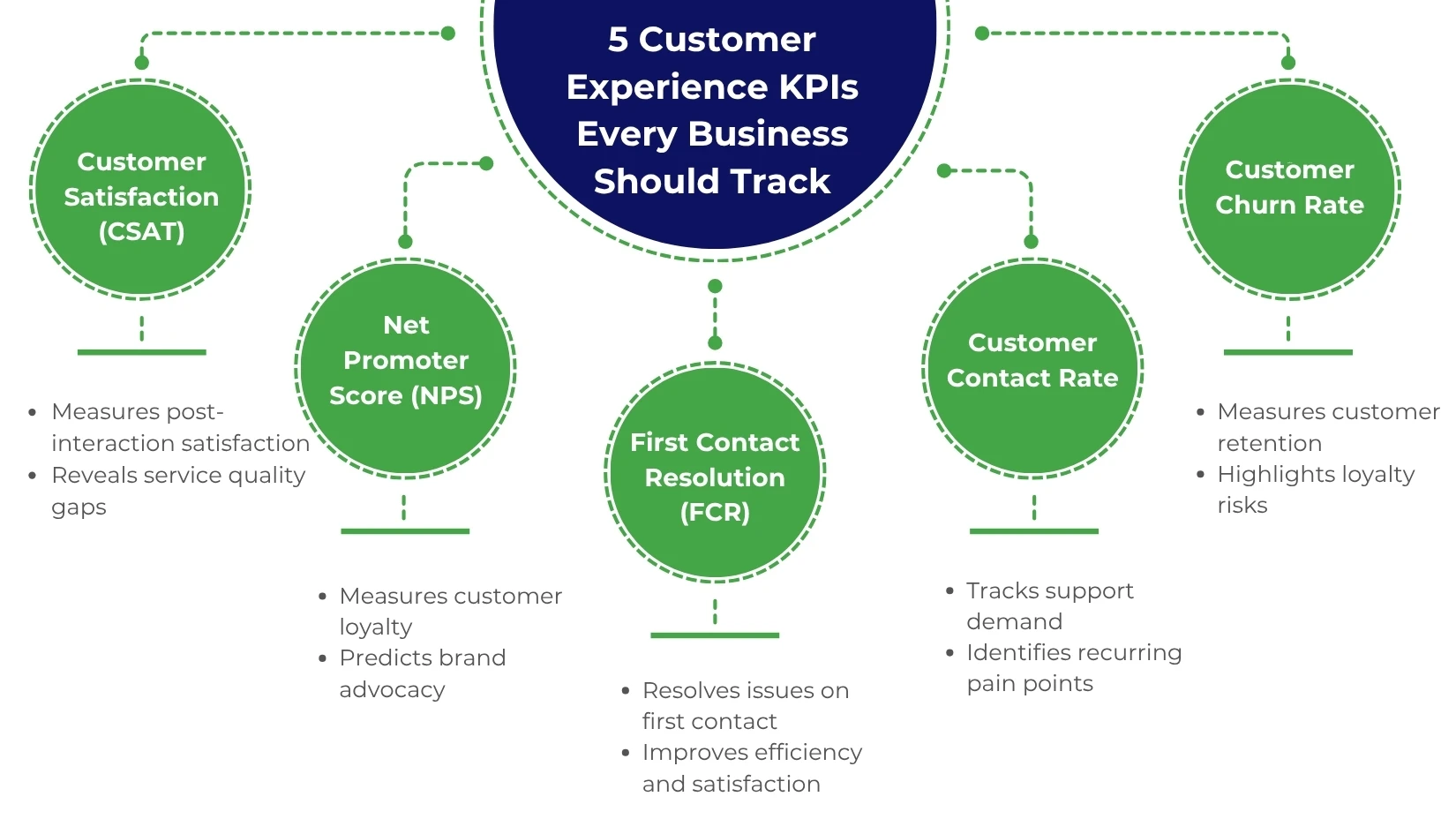
Track the customer experience metrics that drive business growth
Together, these metrics help CPG brands identify operational gaps, improve customer interactions, and make data-driven decisions that strengthen retention and profitability.
1. Customer Satisfaction Score (CSAT): Measure Immediate Customer Sentiment
Customer Satisfaction Score (CSAT) is a leading indicator of how well your organization meets customer expectations after individual interactions. It helps leaders monitor service quality and identify opportunities to improve the customer experience.
What it measures: Customer satisfaction following interactions such as support requests, product inquiries, returns, or complaint resolution.
Business impact: CSAT identifies service gaps, improves support consistency, and helps prioritize operational improvements that strengthen customer retention.
2. Net Promoter Score (NPS): Track Customer Loyalty and Advocacy
Net Promoter Score (NPS) is a benchmark for customer loyalty and long-term brand advocacy. It helps organizations understand whether customer experiences are creating promoters who support sustainable growth.
What it measures: Customers’ willingness to recommend your brand based on their overall experience across products, services, and support.
Business impact: NPS helps leaders monitor customer loyalty, identify retention risks, and evaluate the effectiveness of customer experience initiatives.
3. First Contact Resolution (FCR): Improve Resolution Efficiency
First Contact Resolution (FCR) reflects the effectiveness of customer support. It indicates how efficiently an organization resolves customer issues while minimizing repeat interactions.
What it measures: The percentage of customer inquiries or issues resolved during the first interaction without follow-up, escalation, or repeat contact.
Business impact: Higher FCR reduces support costs, improves customer satisfaction, and increases operational efficiency by resolving issues faster.
4. Customer Contact Rate: Measure Preventable Support Demand
Customer Contact Rate reflects how often customers need to reach out for support. A declining contact rate often indicates that customer journeys, product information, and service processes are becoming more intuitive and effective.
What it measures: The volume or frequency of customer contacts over a defined period, typically normalized by customers, orders, or transactions.
Business impact: Monitoring contact rate helps identify recurring pain points, reduce avoidable support demand, and improve customer experiences through proactive process improvements.
5. Customer Churn Rate: Measure Customer Retention
Customer Churn Rate indicates how effectively an organization retains its customers over time. While many factors influence churn, customer experience remains one of the strongest drivers of long-term loyalty.
What it measures: The percentage of customers who stop purchasing from or engaging with your brand during a specific period.
Business impact: Tracking churn helps leaders evaluate the long-term impact of customer experience initiatives, identify retention risks, and prioritize improvements that strengthen customer loyalty.
Better Customer Experience Starts with Better Operations
Tracking more metrics doesn’t create better customer experiences. Tracking the right metrics and acting on what they reveal does. CPG brands that consistently measure satisfaction, loyalty, resolution efficiency, support demand, and retention are better positioned to improve operational performance, strengthen customer relationships, and drive sustainable growth.
Premier NX partners with CPG brands to turn customer experience insights into operational improvements. By combining customer support, quality assurance, analytics, and process optimization, we help identify the root causes behind recurring product inquiries, complaints, returns, and other preventable customer contacts.
Ready to Strengthen Your Customer Experience Strategy?
About the Author

Lisa Murray is a Consumer Goods Industry Advocate at Premier NX, helping North American CPG brands strengthen support for consumers, retailers, internal teams, and day-to-day operations. Focus centers on building scalable onshore, offshore, and right-shore service models that improve trust, efficiency, insight, and growth across the business.